What a Silicone Vacuum Bag Costs per Lamination Cycle
A cost model for solar laminator bags: divide price by verified cycle life, and a 300-cycle bag at USD 180 loses to a 500-cycle bag at USD 220. Includes the five facts a buyer must send for a comparable quote.
Most solar module plants buy laminator bags the way they buy any other consumable: three quotes, lowest price per bag wins. That comparison hides the figure the finance team should actually be tracking, which is the cost of a single lamination cycle. A bag that costs 15% less but fails 40% earlier raises the cost of every module that passes through the chamber, and it does so quietly, because the loss shows up in scrap and downtime rather than on the purchase order.
Cost per cycle is the only number that compares
The calculation is short, and every supplier can be asked for the two inputs it needs. The first input is the delivered price of one bag. The second input is the number of cycles that bag completes before it leaks. A buyer who divides the first by the second gets a figure that is directly comparable across suppliers, countries and bag designs, and that figure survives every negotiation trick a sales team can play with square metres, kilograms or "premium" grades.
Two published starting prices, divided by two published cycle lives
Our own catalogue illustrates the method without any adjustment. A finished silicone vacuum bag for solar laminators starts at USD 220 per set and carries a stated life of 500+ cycles; 220 divided by 500 gives USD 0.44 per cycle. A silicone vacuum bag film supplied on a roll starts at USD 180 per roll and carries a stated life of 400+ cycles; 180 divided by 400 gives USD 0.45 per cycle. Both numbers are starting prices before freight, duty and local handling, and the real price of a bag rises with bed size, port count and wall thickness. The arithmetic, however, is what a buyer should be running on every quote received.
| Parameter | Finished bag | Roll film |
|---|---|---|
| Starting price | USD 220 / set | USD 180 / roll |
| Stated life | 500+ cycles | 400+ cycles |
| Cost per cycle at starting price | USD 0.44 | USD 0.45 |
| Thickness | 1.5 – 3 mm | 0.8 – 2 mm |
| Maximum temperature | 180 °C | 180 °C |
| Width | Built to the machine bed | Up to 3,000 mm |
| Lead time | 10 – 20 days | 10 – 20 days |
| Minimum order | 1 set | 1 roll |
What one chamber consumes in a year
A cost per cycle becomes a budget only when it is multiplied by the cycles a plant actually runs. Our solar and PV application page sets out a typical laminator duty: a peak laminate temperature of 145–160 °C held for 12–18 minutes, vacuum held at or below 5 mbar through the cure, a full heat-and-cool cycle of 25–40 minutes, and 6,000–12,000 cycles per chamber per year. Those are the conditions a bag has to survive, and they are also the multiplier that turns a unit price into an annual line item.
The arithmetic at our published figures
Divide 6,000 and 12,000 cycles by the 500-cycle life and a single chamber consumes between 12 and 24 bags in a year. At the USD 220 starting price, that is USD 2,640 to USD 5,280 per chamber per year before freight. A plant running four chambers is therefore making a five-figure annual decision each time it settles a bag specification, and the specification deserves more scrutiny than the purchase order usually receives.
A shorter life moves the number more than a cheaper bag
Consider a competing bag offered at USD 180, which sits 18% below our starting price. Assume the same bag reaches 300 cycles instead of 500, a figure inside the port-area failure window described on the application page. The cost per cycle becomes 180 divided by 300, or USD 0.60, which is 36% above the USD 0.44 baseline. The cheaper bag wins only if its life stays above roughly 410 cycles, because that is the point at which 180 divided by the life falls back to 0.44. A buyer who negotiates on price alone is betting that both the bag and the supplier will deliver the longer life without being asked to document it.
Cycle life is decided at the port
The flat area of a bag ages slowly, and buyers tend to inspect it first because it is the part they can see. The vacuum port ages fast, because it is the only place where the bag is mechanically restrained while everything around it moves. Our application page locates port-area pinholes and splits at 300–600 cycles, and the mechanism is mechanical before it is chemical: stress concentrates at the collar, and heat ageing hardens that spot faster than the rest of the bag.
What we change at the collar
- A 3.0 mm wall at the port against 2.3 mm across the flat, so the restrained area has material to spare.
- An additional reinforcing ply instead of a glued patch, because adhesive is the first thing to soften at laminate temperature.
- A radiused transition, so the membrane does not fold over a sharp corner every time vacuum is applied.
- Vulcanised bonding at the collar rather than cold adhesive, which keeps the joint intact through thousands of pump-downs.
What the operator changes
- Cleaning agent. Acetone and IPA attack the silicone more aggressively than the EVA deposit they are meant to remove.
- Cleaning temperature. Wiping at 60–80 °C with a neutral silicone-safe agent lifts residue with less mechanical force.
- Storage. A bag folded on a shelf keeps the fold permanently; a bag rolled on a drum keeps its shape.
- Frame condition. A sharp clamp edge cuts a bag long before the compound has aged, and radiusing that edge costs almost nothing.
Wall thickness sets both price and life
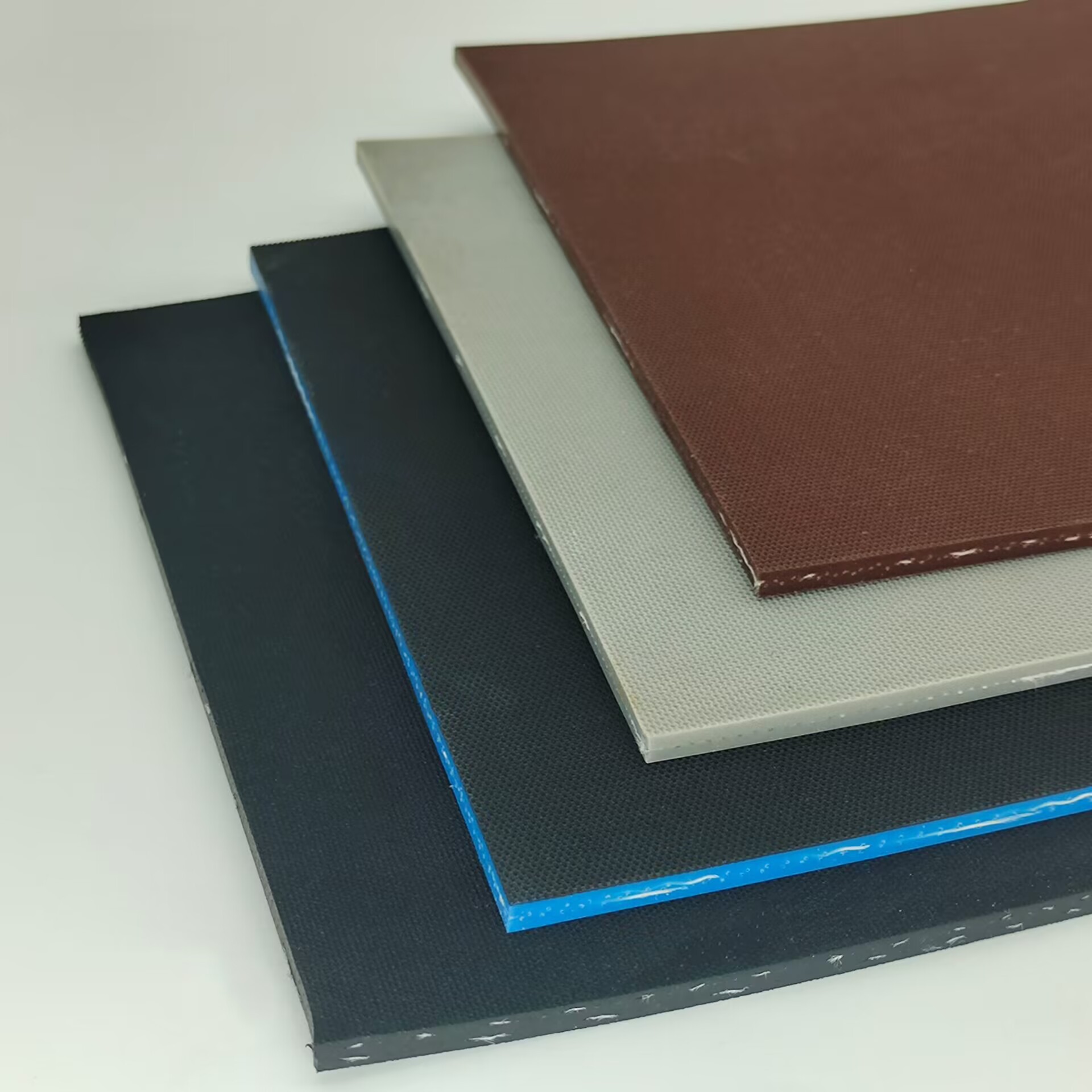
Thickness is the specification where price and service life pull in opposite directions, so it is the one item buyers most often leave to the supplier. Below roughly 2.2 mm a bag drapes beautifully but bridges across busbars and ribbon joints, and the unsupported span fatigues until it pinholes. Above 3.2 mm the bag stops following the module edge, air stays trapped in the frame groove, and pump-down time climbs. For a standard 60- or 72-cell module with 0.3–0.5 mm busbar height, we specify 2.3 mm across the flat and 3.0 mm at the port collar; double-glass and thick POE stacks take 3.0 mm uniformly. Because bag price tracks surface area and thickness together, a quote per kilogram or per square metre can never be compared with a quote per finished bag.
Roll film or a finished bag: where the crossover sits
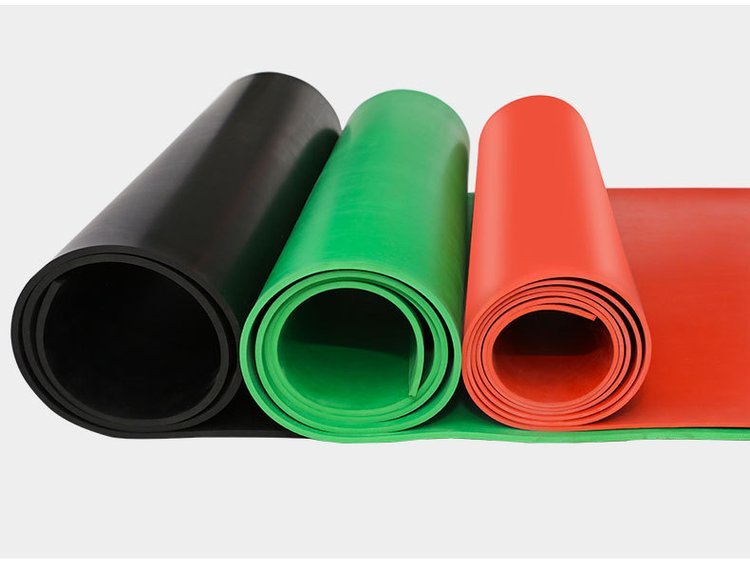
The roll film is 0.8–2 mm thick, up to 3,000 mm wide, supplied in 10–50 m lengths, rated to 180 °C, and available transparent or blue. It carries no seam at all, which is why large-format laminators use it, and it costs less per square metre than a finished bag because the buyer completes the assembly.
Choose the roll when the bed changes
A plant that re-tools between module formats, or that runs a bed wider than a standard bag, usually prefers to weld its own frame seam from roll stock. The roll also travels better: a 3,000 mm one-piece bag needs a plywood crate and freight class of its own, while a roll of the same width ships on a core.
Choose the finished bag when the geometry is fixed
Where port count is high, where the frame groove is deep, and where the buyer wants a single vulcanised body with no field joint, a finished bag removes a variable. Our finished solar bags ship as seamless or fully vulcanised bodies, custom-built to the laminator, and both formats leave the factory in 10–20 days with a minimum order of one unit.
Three inputs to verify before you accept a quote
Every quote can be normalised, provided the buyer asks the same three questions of every supplier. The questions are not technical traps; they simply force the comparison onto a common basis.
- What the unit price covers. Bed size, wall thickness, port count and thread, frame groove, packaging and the Incoterm. A price without these details is not a price.
- How the cycle life was measured. Temperature, dwell time, vacuum level, and whether EVA or POE outgassing was present during the test. A room-temperature fatigue figure tells a laminator operator very little.
- What counts as failure. A pinhole that breaks vacuum, a stain that prints onto the backsheet, and a wrinkle that survives the cycle are three different defects with three different costs, and a supplier should state which one ends the life figure.
What a failure actually costs a line
A leak costs more than a bag. It costs the modules inside the chamber, the labour to strip and refit the assembly, the downtime of a line whose cycle is already 25–40 minutes, and the delivery commitment made to a customer. We deliberately do not publish a single figure for that loss, because module value, line rate and contract penalties differ too much between plants to make one number honest. We do recommend that buyers enter their own figure into the comparison, since the cost of scrapping even one batch usually exceeds the annual difference between a cheap bag and a correct one.
Send the bed drawing, get a number you can compare
A comparable quote needs five facts from the buyer: chamber size and shape, port position with thread and count, frame groove width and depth, annual cycle count, and the replacement interval the plant is prepared to accept. With those five facts we build a 3D model of the bag for approval before tooling is cut, and we quote against the same cycle basis the buyer uses internally.
Our published terms are simple to check: minimum order of one set, 10–20 days lead time, ISO 9001 certification, plywood crate packing, HS code 4016.99, and a free sample on a freight-collect basis so the material can be tested on a real bed before a production order is placed. Send the drawing through the contact page, and the reply will include a cost-per-cycle figure alongside the unit price, so the comparison can start where it should have started.
Send a drawing or sample — we reply with a recommendation and quotation within 48 hours.
Request a Quote