How ISO Certification Protects Silicone Buyers: What to Verify Before You Order
An ISO 9001 certificate does not prove a silicone part will perform in your machine. It proves the factory has an audited system for making the same part the same way twice. Here is which certificates matter for silicone membranes, vacuum bags, foam and gaskets, what each one actually covers, and how to verify a supplier's claim in about ten minutes.

Short answer: ISO certification tells you almost nothing about a silicone part's performance, and a great deal about whether the factory can repeat that performance. A certificate is evidence that incoming compound is checked, that batches are traceable, that instruments are calibrated, that drawings do not silently change and that failures are root-caused rather than re-labelled. For buyers sourcing silicone membranes, vacuum bags, foam and gaskets from overseas, that system is the difference between a line that runs for years and a container that fails six weeks after installation. This guide covers which certificates matter, what each one really covers, and how to check a claim in ten minutes.
What an ISO 9001 Certificate Actually Certifies
ISO 9001:2015 is a quality management system standard. It names no material, no product and no performance level. It certifies that an organisation has defined its processes, measures them and corrects them when they drift.
Inside a silicone plant, that translates into controls a buyer can ask to see:
- Incoming compound verification. Durometer, specific gravity and cure system checked against the batch certificate before compound reaches a calender or a press.
- Batch records tying every roll, sheet or moulded part to a compound lot, a machine, a shift and a cure cycle.
- Calibration schedules for durometers, thickness gauges, tensile testers and curing ovens.
- Document control over drawings and revisions, so the 3.0 mm membrane you approved in 2024 is still 3.0 mm in 2026.
- Change control. A supplier that switches compound source or cure system without notifying you has an ISO system on paper only.
- Corrective action. Nonconformities logged, root-caused and closed rather than shipped and explained later.
None of this is printed on the certificate. It lives in the audit report and in the records. That gap is why the verification steps further down matter more than the PDF itself.
The Certificates That Matter, and Which Apply to You
ISO 9001: the baseline for every buyer
Any serious silicone manufacturer should hold it. What matters is the scope statement: it must name the actual manufacturing site and the product families covered. A certificate that says "manufacture of rubber and plastic products" and lists your supplier's plant address is useful. One that says "sales of silicone products" and lists an office is a different document entirely.
ISO 14001 and ISO 45001: environmental and safety
These say little about part quality but a lot about plant stability and supply-chain risk. European tenders and large OEM vendor questionnaires increasingly ask for both. A supplier holding them is usually a supplier that expects to still be operating when your five-year programme ends.
ISO 13485: only if you are in medical devices
Relevant when the silicone part is itself a component of a regulated medical device, where design controls and device history records apply. If your gasket sits inside a diagnostic instrument but is not a device component, ISO 9001 plus USP Class VI or ISO 10993 data is usually the practical requirement. Buying a general industrial sheet needs neither.
IATF 16949: automotive production parts
Required for automotive production components and carries PPAP, APQP and MSA obligations. Genuine IATF certification is uncommon in general industrial silicone. If a supplier claims it, read the scope carefully, because it is frequently held by a sister plant that does not make your part.
Certification Is Not Compliance: Food Contact and Flammability
This is where buyers most often get caught. ISO 9001 says nothing whatsoever about food safety. Food-contact silicone is judged against separate frameworks:
- United States: FDA 21 CFR 177.2600 for rubber articles intended for repeated use, supported by extractables testing.
- European Union: Framework Regulation (EC) 1935/2004, with silicone specifically addressed by Council of Europe Resolution AP(2004)5 and national rules such as German BfR Recommendation XV.
- Flammability: UL 94 for electronics housings and seals, FAR 25.853 for aircraft interiors.
A factory can be fully ISO 9001 certified and still be unable to supply food-contact compound, because the two things are unrelated. Ask for the compound's declaration of compliance and the migration test report, not the management system certificate. Our food, medical and electronics page shows how these grades are specified in practice, and the food line gasket case shows what a compliant specification looks like when it reaches a production line.
How to Verify a Certificate in Ten Minutes
- Get the certificate number and the issuing body's name. Both must appear on the document, not just a logo.
- Confirm the body is accredited. In China that means CNAS accreditation, normally as an IAF member. Unaccredited certificates are inexpensive and carry no weight with auditors or customs.
- Search the number on the certification body's own website. Never rely on a PDF the supplier emailed you; PDFs are easy to edit.
- Read the scope line by line. Does it name silicone or rubber product manufacturing (IAF scope 14)? Does the site address match the factory that will actually produce your parts?
- Check validity and surveillance stamps. A three-year certificate requires annual surveillance audits. Missing stamps usually mean a suspended or withdrawn certificate.
- Ask for the most recent audit summary and any open nonconformities. A supplier that shares this openly is a supplier with nothing to hide.
What ISO Discipline Looks Like on Your Purchase Order
Certification becomes tangible in the paperwork that ships with the goods. A well-run silicone supplier should provide, as standard:
- A certificate of analysis per batch, listing durometer, tensile strength, elongation, tear resistance and thickness.
- Lot traceability, so a field failure can be traced back to a compound batch and a cure cycle.
- Written change notification before any compound, cure system or process change, with your approval required.
- A named quality contact and a stated response time for complaints.
- First-article inspection reports for new tooling and for every re-cut mould.
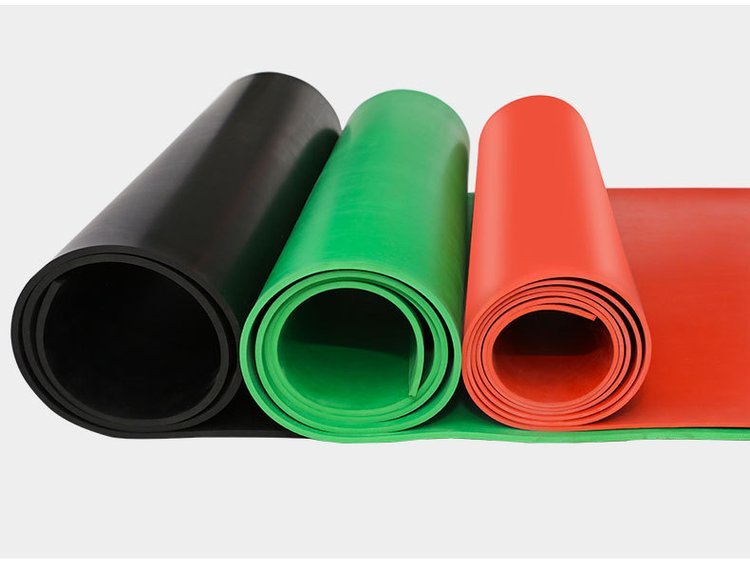
The last two matter most for die-cut and moulded gaskets and for custom moulded parts, where a mould that is quietly re-cut without your sign-off is a specification change nobody announced. The same logic applies to silicone rubber sheet: consistent gauge and durometer across shipments is a system output, not a promise.
Red Flags When a Supplier Says "ISO Certified"
- "ISO compliant" or "ISO standard" instead of "ISO certified". The first two mean nothing.
- A scope limited to sales or trading while the factory is a different legal entity.
- An expired certificate, or one expiring within weeks with no renewal evidence.
- Reluctance to state the manufacturing site address in writing.
- A certification body whose name returns no search results.
- Technical questions routed to a salesperson whose only answer is a price.
None of these automatically disqualifies a supplier, and small workshops can produce excellent silicone. But each one means you should sample, inspect and test before committing to volume rather than after.
Frequently Asked Questions
Does ISO 9001 mean the silicone is food grade?
No. ISO 9001 certifies a management system, not a material. Food-contact suitability comes from the compound formulation and from testing against FDA 21 CFR 177.2600, EU 1935/2004 with Resolution AP(2004)5, or German BfR XV. Ask for the declaration of compliance and migration data separately.
Is a trading company's ISO certificate worthless?
Not worthless, but scoped to sales and distribution. It confirms order handling and documentation, not manufacturing control. If the certificate does not name the plant making your parts, you still need to qualify that plant.
Do I need an ISO 13485 supplier for silicone gaskets in medical equipment?
Only when the gasket is a component of a regulated device. For equipment housings, benches and non-patient-contact sealing, ISO 9001 with USP Class VI or ISO 10993 extractables data on the compound is normally sufficient and considerably easier to source.
How often should I re-verify a supplier's certification?
At onboarding and then annually, plus any time the supplier announces a site move, an ownership change or a compound change. Certificates get suspended quietly, and the buyer usually finds out at the port.
Get the Certificate and the Sample Together
Verification is only half the decision. The other half is performance in your process, which no certificate can predict. SHINEKIM Silicone has manufactured silicone membranes, sheets, vacuum bags, foam, cord, gaskets, rollers and custom moulded parts in Shanghai since 2017, ships to more than 60 countries under an ISO-certified quality system, and sends free A4 samples of standard specifications so you can run your own trial before discussing volume.
Send Jonathan your drawing, your operating temperature and your current failure mode. You will get a material recommendation, a lead time and a price within 48 hours, along with the certificate scope and the batch data you need to qualify us properly. WhatsApp +86 131 4075 9279 or email shinekimrubber@163.com to request your free sample.
Send a drawing or sample — we reply with a recommendation and quotation within 48 hours.
Request a Quote