01 The problem
The filler runs a CIP cycle with 1.5% caustic at 80 °C twice a day. Their clamp-joint gaskets were 70 Shore A and took a permanent set after each wash, so the joint needed re-torquing and often still wept.
Because the joints are opened for inspection daily, a hard gasket that has taken a set cannot reseal reliably. Leaks were showing up as product loss and, worse, as hygiene non-conformances during audit.
02 What we changed
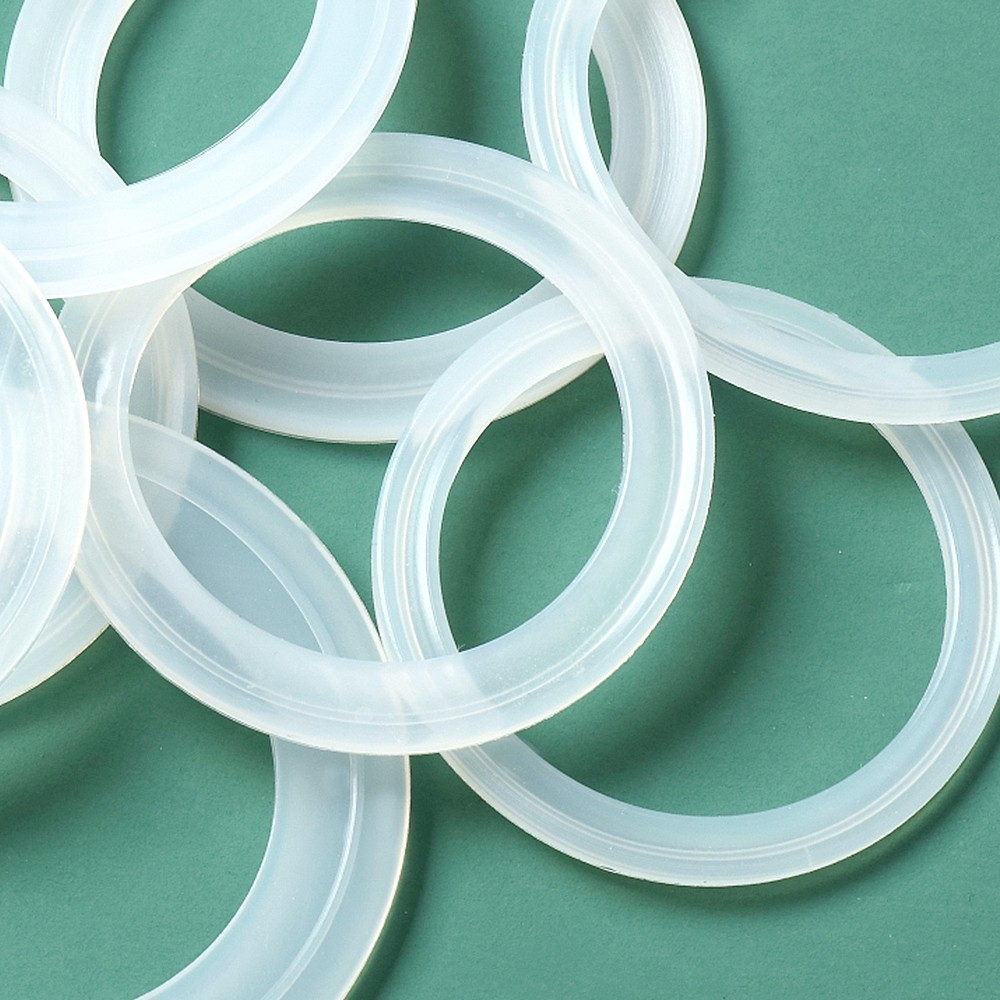
We moved them to a 50 Shore A platinum-cured food-contact compound with compression set tuned for repeated open/close cycles rather than for a permanent joint. Lower hardness gives the gasket enough compliance to reseal against a joint that has already been compressed.
Gaskets are die-cut to ±0.1 mm on the sealing face and supplied with batch-matched food-contact and RoHS reports.
| Material | Platinum-cured, food-contact grade |
|---|---|
| Hardness | 50 Shore A (was 70) |
| Compression set | Tuned for serviceable joints |
| Compliance | Food contact + RoHS reports |
03 The outcome
After 200 CIP cycles the joints showed no leakage, and the plant stopped re-torquing after every wash.
Gasket consumption fell about 45% because gaskets are now replaced on schedule rather than whenever a joint wept.
Send us the failure mode, operating temperature and cycle count — recommendation and samples within 48 hours.
Request a Quote