Applications

Thermoforming & Vacuum Forming

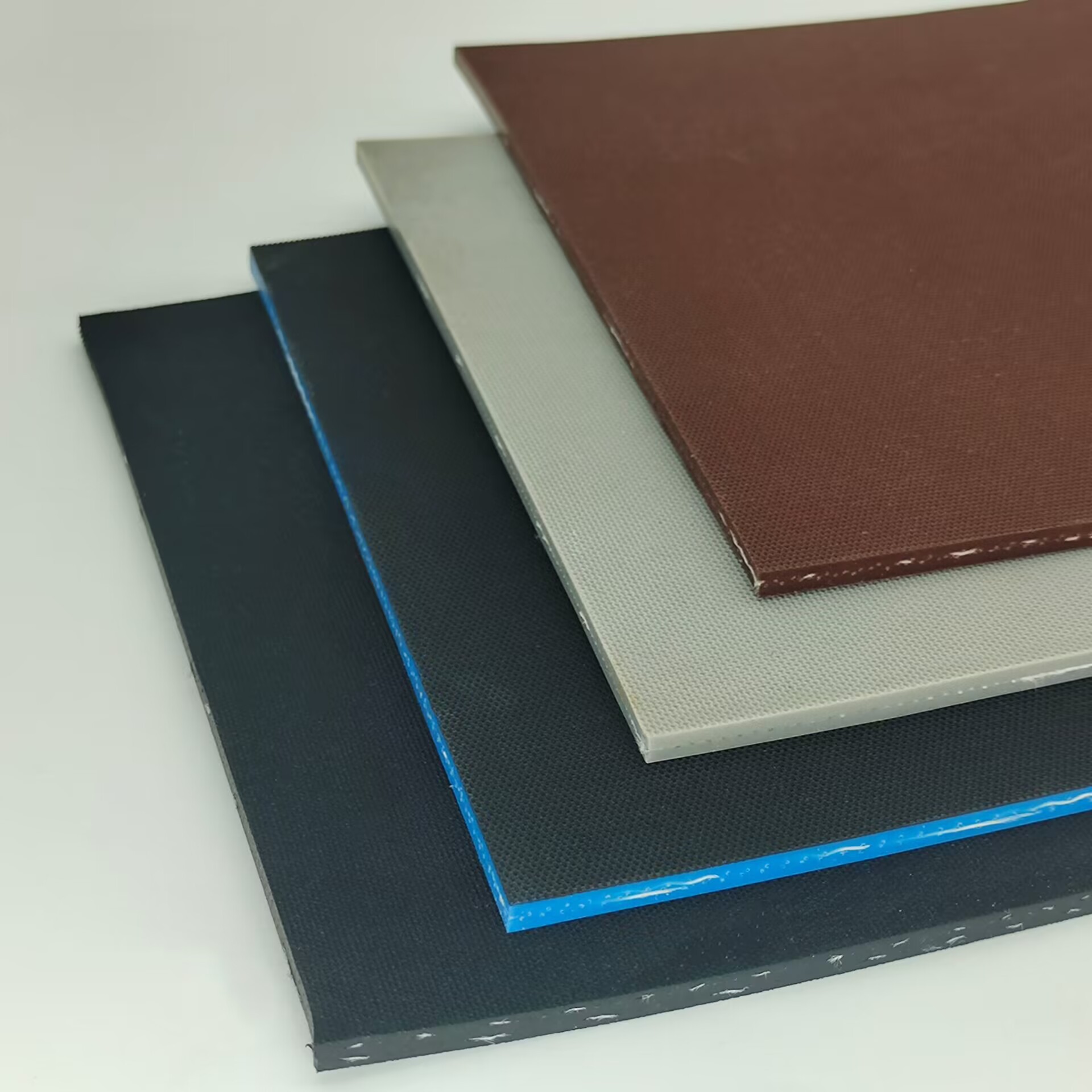
Heat-resistant silicone membranes and pads for thermoforming, vacuum forming and plug-assist machines.

In thermoforming the membrane does two jobs at once: it seals the vacuum and it pushes the hot sheet into the cavity. Every cycle it touches a sheet at 160–200 °C, stretches over the same plug, and releases without sticking. Sticking, webbing and corner thinning are the three defects that trace back to the membrane rather than the mould.

Thermoforming & Vacuum Forming
Thermoforming & Vacuum FormingIndustry solution

Why this material, for this duty cycle

The duty cycle, in numbers

Start here before choosing a grade
Sheet temperature at contact 160–200 °C (PET up to 210 °C)
Vacuum 0.6–0.9 bar differential
Cycle time 20–90 s including cool
Plug-assist stroke 20–300 mm
Cycles per year 50,000–200,000 on rotary machines

These ranges come from lines we work with every week. If your duty sits outside them, say so — compound, hardness and reinforcement can all be tailored.

How to specify it: thickness, hardness, reinforcement

These four points follow the order you will actually face them in, not the order of a datasheet.

01

Thickness is set by plug stroke and corner radius

For shallow parts with generous radii, 1.5 mm is enough and gives the fastest heat transfer. Once the plug stroke passes about 80 mm, or the corner radius is under 5 mm, the membrane is being drawn to 600–700% locally and 1.5 mm starts to thin into a weak point. Move to 2.0–2.5 mm, and radius the plug if the part design allows — a 5 mm radius on the plug buys more membrane life than any compound change.

02

Surface tack matters more than hardness in thermoforming

A hot sheet that sticks to the membrane at the end of the stroke gets pulled back as the mould opens, and you see it as webbing between two features or a stretched glossy patch. Standard 60 Shore A silicone is already low-tack, but the post-cure matters: a poorly post-cured sheet releases low-molecular siloxane that acts like a slow-release adhesive at 180 °C. We post-cure every thermoforming sheet, and we do not recommend silicone spray as a workaround — it contaminates the sheet surface and ruins downstream printing.

03

When to move from plain to fabric-reinforced

High-speed rotary machines run 150,000+ cycles a year, and a puncture stops the whole line. Sharp plugs, glass-filled sheet and thick PET all raise puncture risk. A reinforced membrane roughly halves elongation to 600% but resists a propagating tear, so a nick stays a nick instead of opening across the membrane. If your scrap is caused by a membrane that failed mid-run rather than by part geometry, reinforced is the cheaper answer.

04

Cooling rate is a membrane property too

The membrane sits between the hot sheet and the cooling air or water circuit, so its thickness and thermal conductivity set how fast the part can be de-moulded. Adding 1 mm of membrane adds a noticeable delay to every cycle; at 60 cycles an hour that is real capacity. This is why we do not "over-specify for safety" on thickness — a membrane that is 1 mm too thick costs you output on every single part, while being only marginally more durable.

What fails in the field, and why

This is what after-sales calls are actually about. Most "the material is no good" verdicts turn out to be a specification or handling issue.

F1

Webbing between features, or a glossy stretched patch

Cause
The sheet sticks to the membrane at the end of the stroke and is dragged back on release. Often blamed on the mould temperature when the real cause is surface tack from incomplete post-cure.
Fix
Fully post-cured sheet; raise mould temperature slightly so the part sets before release; never use silicone spray.
F2

Corner thinning and splits on deep draws

Cause
Local strain past 700% with insufficient membrane thickness, or a plug radius under 3 mm concentrating the draw.
Fix
Go to 2.0–2.5 mm, radius the plug to at least 5 mm, or switch to a reinforced membrane.
F3

Membrane goes brittle and cracks across the field

Cause
Thermal ageing accelerated by running at the top of the sheet temperature window, or by radiant heaters left on during downtime.
Fix
Keep contact temperature inside the recommended window, shield the membrane from direct radiation during idle, and replace on hardness rise rather than on visible cracks.

Typical specification

Typical values for the grades we ship most; all adjustable to your duty.

Hardness50–70 Shore A
Tensile strength≥ 8.0 MPa (≥ 10 MPa reinforced)
Elongation at break≥ 700% (≥ 600% reinforced)
Service temperature−60 to +230 °C, non-tack to 200 °C
Thickness1.5–2.5 mm (up to 6 mm reinforced)
SurfaceSmooth, low tack, fully post-cured

Need the full TDS or MSDS? Ask us — usually back to you within 24 hours.

What this industry actually orders

Not the whole catalogue — the combination we ship most often for this duty.

Ask for a quote against your duty cycle

Products specified for this industry

3 items

Questions buyers actually ask

Will the membrane stick to hot PET or PP?
A fully post-cured sheet will not. Sticking almost always means the membrane is under-cured or has been contaminated by silicone spray, mould release or plasticiser from earlier PVC work.
How many cycles can I expect on a rotary machine?
Customers typically replace at 80,000–150,000 cycles on rotary machines running 160–190 °C sheet. Sharp plugs and glass-filled sheet shorten that considerably; radiused plugs and reinforced membrane extend it.
Can the membrane replace the plug entirely?
For shallow parts with modest draw ratios, yes — a membrane-only form avoids plug marks. Beyond a draw ratio of about 0.5 you need plug assist, and the membrane then works with the plug rather than instead of it.
Do you supply sheet cut to the frame?
Yes, cut to size with trim allowance, or pre-bonded to a spare frame for quick changeover.
What is the lead time?
Standard 1.5 mm and 2.0 mm sheet ships in 7–12 days; reinforced and pre-bonded options take 15–20 days.

Send us the temperature, pressure and cycle count

You get a grade recommendation, a thickness plan and an A4 sample within 48 hours — no order required.

Request a Quote

Other industries