Heat Press Pad Thickness: 3 mm, 6 mm or 10 mm?
A pad that is too hard leaves a halo, too soft prints the zip through. How 3, 6 and 12 mm silicone foam behave on real transfer work, and when a pad is finished.
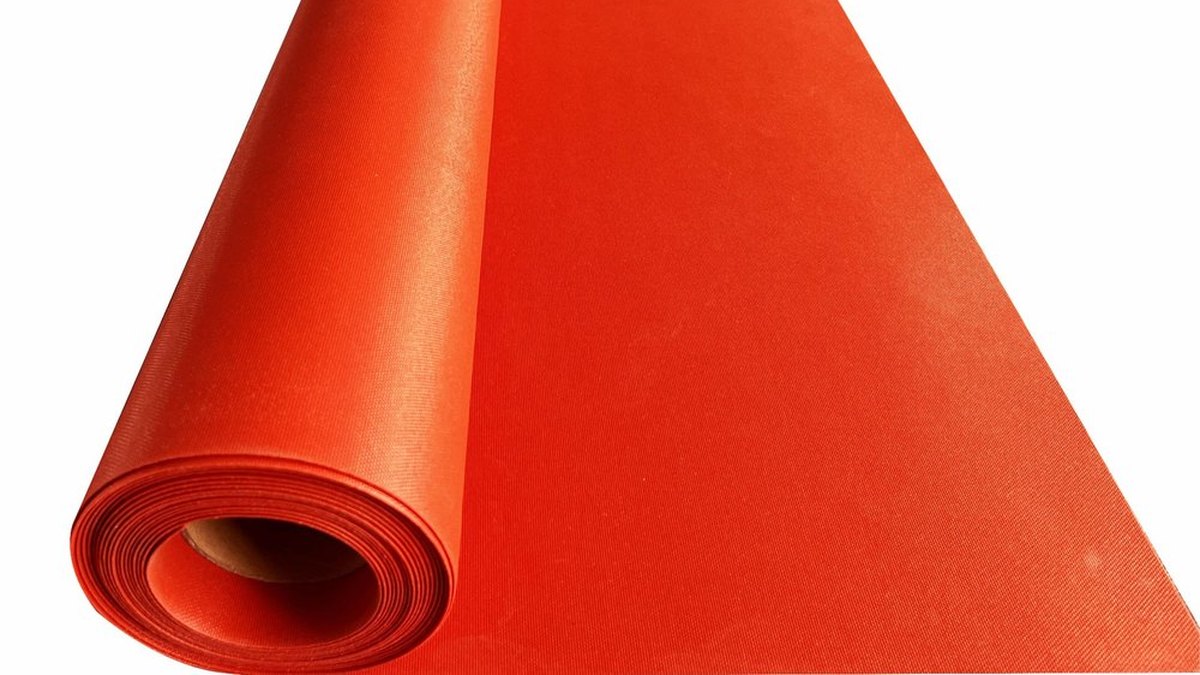
Most transfer faults blamed on temperature or pressure are actually the pad. A pad that is too hard leaves a pale halo around the motif; one that is too soft lets every zip, button and hem print straight through the garment. The pad has a single job — turning a small platen into an even surface — and thickness is the dial you turn to do it.
What the pad does under the platen
A heat press platen is flat, and it is smaller than most of the things you press on it. The pad has to do two contradictory jobs at once: stay flat where the garment is flat, and give way where the garment is not. Solid rubber cannot do the second one. Open cell silicone foam can, because air leaves the cells under compression and is drawn back in when the platen lifts — which is also why the pad returns to its original thickness instead of taking a permanent set.
Thickness decides how much of that give you have. At 3 mm there is almost no travel: the pad evens out the platen, but a seam or a zip goes straight to the print. At 12 mm there is enough travel to swallow hardware — but the heat path gets longer and the pressure at the surface gets softer, which is its own problem on thin fabrics.
Thickness by job
| Work | Thickness | What it gives you |
|---|---|---|
| Single-layer vinyl, thin knits, small flat motifs | 3–4 mm | Shortest heat path, no hardware to absorb |
| T-shirts, hoodies, DTF, standard plastisol | 6 mm | General purpose — covers seams without softening the press |
| Zips, buttons, thick hems, bags, multi-layer work | 10–12 mm | Enough travel to stop hardware printing through |
Most shops end up with 6 mm on the machine and a 10 mm sheet on the shelf for the awkward jobs. If you press a mix of garments on one press, that combination covers more ground than trying to find a single thickness that does everything.
Thickness alone is not the specification
Two pads at 6 mm can behave like different materials. Density and hardness matter as much as the millimetres: the foam we supply for press pads runs 0.25–0.40 g/cm³ at 25–40 Shore 00. Take a 10 mm pad at the dense end of that range and it feels harder under the platen than a 6 mm pad at the light end.
That is why swapping a pad on thickness alone often changes the result. When you reorder, ask for density and compression set alongside the thickness — a foam that has a low compression set keeps its recovery after thousands of cycles, which is the difference between a pad that lasts a season and one that goes flat in a month. The same numbers decide how open cell and closed cell foam behave under pressure, and why only one of them belongs on a press.
Three failures and what they tell you
A halo around the motif. The pad is too hard, too thin, or both for the thickness of the garment. Pressure is concentrated at the platen edge because the pad cannot conform, so the outer few millimetres of the transfer never reach full contact.
Zips and buttons printing through. The pad is too soft or too thin to absorb the hardware, and the usual reaction is to raise the pressure — which makes it worse by compressing the pad further. Go thicker, not harder.
A shiny, glazed patch in the middle. Heat and pressure over thousands of cycles harden the cell walls and close the surface. Pigment from plastisol and solvent inks settles into that glazed area and then transfers between jobs. Keep a cover sheet between the pad and the print, and treat glazing as the start of the end for that pad.
When to replace the pad
Measure the centre of the pad with a caliper once a month and write the number down. Replace it when the centre has lost about 20% of its original thickness, when the surface feels slick rather than slightly grippy, or when the edges of transfers start coming out pale on a job that used to run clean. A pad that has gone flat still presses — it just produces rejects that get blamed on the ink, the transfer paper or the operator.
On a busy single-shift press doing mixed garment work, that is typically every six to twelve months for a 6 mm pad. Thicker pads last longer in calendar time but compress further before they fail, so the 20% rule matters more than the date.
What to send when you ask for a quote
Five numbers get you an accurate price and a cut drawing: platen size in millimetres, thickness, plain or pressure-sensitive adhesive backing, press temperature and dwell time, and roughly how many square metres a month you go through. If the pad is glued to the platen rather than laid loose, say so — the adhesive grade changes.
We cut to any platen size up to 1000×2000 mm, die-cut or CNC, and send a cut sheet drawing for approval before production. The material itself is on the heat press silicone foam sheet page, with the full temperature and hardness data; for pressing tables and ironing stations rather than transfer platens, the spec is slightly different and is covered in this guide to ironing table foam.
A single trial sheet is enough to prove it on your own press — run it for a week on the jobs that give you trouble, then order production volume. Send us the platen size and we will quote it with the sample.
把图纸或样品寄给我们,48 小时内回复选型与报价。
获取报价