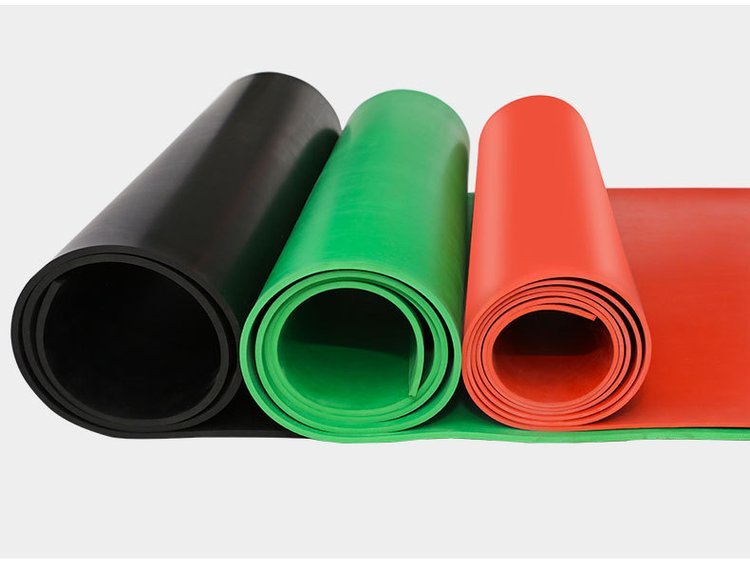
Silicone Foam for Ironing Tables: The Specs That Decide Pad Life
On a steam-heated ironing table the pad usually fails from the inside out: polyurethane foam absorbs condensate, wicks it back into the garment as water marks, and collapses under the iron within weeks. Open-cell silicone foam is the replacement, and the numbers that decide how long it lasts are cell structure, thickness, compression set and continuous temperature - not price per square metre.
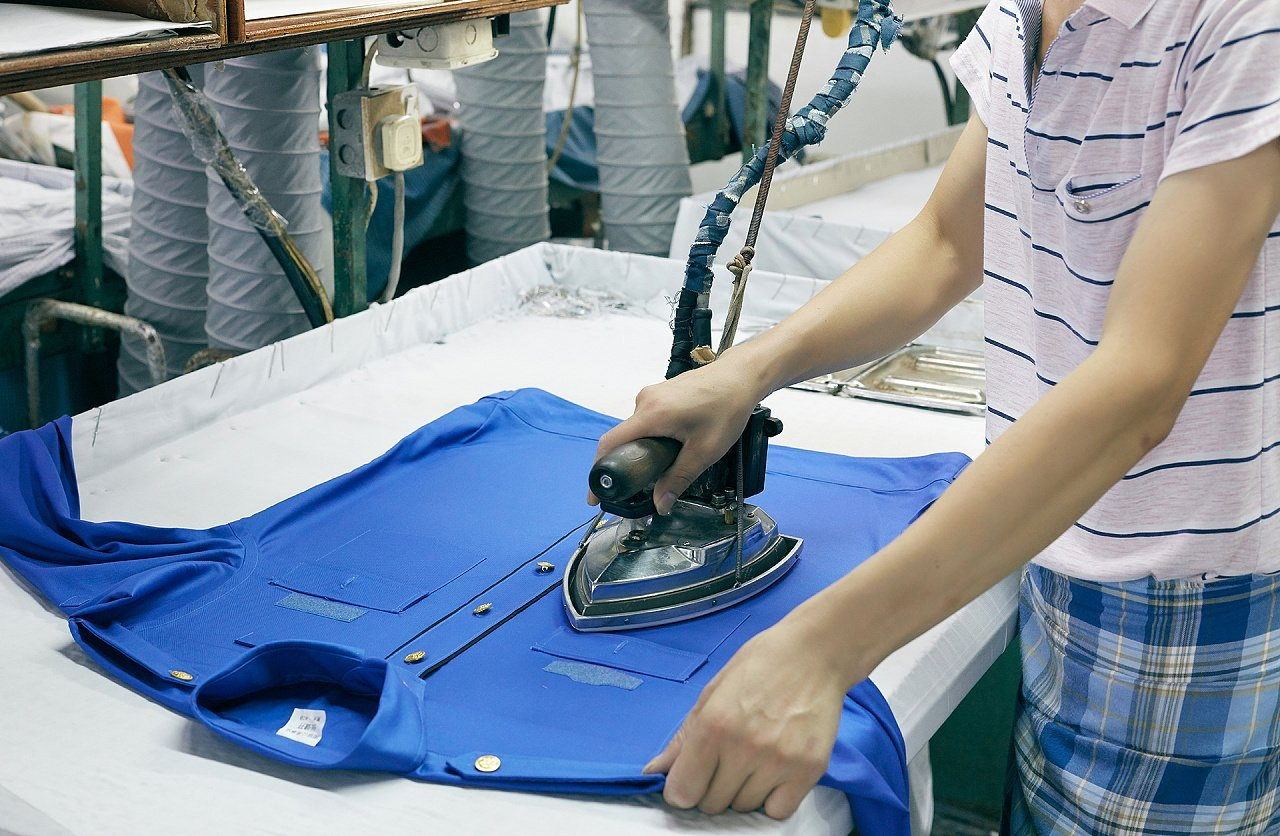
A pressing table looks like a simple piece of furniture: a heated plate, a pad, a cover cloth. In practice the pad is the part that decides whether a finished garment leaves the station clean or comes back for re-pressing. When a plant replaces polyurethane with silicone foam for ironing tables, the change is rarely about cushioning feel. It is about steam having somewhere to go, and about a surface that stays flat after ten thousand presses.
This guide covers the specifications that matter on a steam table, the values SHINEKIM supplies for open-cell silicone foam, and a way to trial one station before committing a whole line.
Why a polyurethane pad fails on a steam table
PU foam is a closed-ish, water-absorbing material. Steam driven through the cover cloth condenses inside it, and once the pad is saturated the moisture has nowhere to go but back up into the fabric under the next press. On dark uniform cloth that shows as a watermark along the press line, which means re-pressing or scrapping the panel.
The second failure is mechanical. PU softens as it heats, so the area under the iron takes a permanent set. The table surface goes concave, pressure stops being even across the panel, and creases set unevenly. In the Vietnam uniform plant we documented, pads were collapsing within four to six weeks and being changed on a rolling schedule across 60 stations.
Both failures come from the same root cause: the pad is holding water and heat instead of passing them through.
What the pad actually has to do
Ranked by how often they cause complaints, the requirements on a pressing table are:
- Pass steam through. Steam must travel through the pad and out the back, not condense inside it.
- Recover its thickness. Every press compresses the pad; it has to spring back, cycle after cycle.
- Hold hardness at temperature. A pad that softens at 150 °C cannot keep pressure even.
- Stay flat across the table. Thickness variation shows up directly as pressure variation.
- Resist the chemistry. Sizing agents, softeners and spotting chemicals all reach the pad through the cover.
Open-cell silicone satisfies all five because the cell walls are interconnected, so the material is permeable by design rather than by perforation. The comparison with closed-cell sponge is covered separately in our open cell vs closed cell silicone foam guide; for a pressing table the answer is effectively always open cell.
The four specifications that decide pad life
1. Cell structure: open cell, continuously permeable
Ask for the airflow or permeability figure, not just the words "open cell". A pad that is only surface-perforated will clog with lint and sizing residue within weeks and behave like a closed pad afterwards. Genuine open-cell foam keeps a connected path through the full thickness.
2. Thickness matched to the table, not to habit
Thickness sets both the cushioning and the steam path length. SHINEKIM supplies open-cell foam in 3–20 mm as roll goods and 2–25 mm as sheet, which covers most pressing equipment:
- 6–10 mm — flat steam-heated tables and vacuum tables under a tight cover. The working range for most garment finishing.
- 10–15 mm — curved bucks and shoulder presses, where the pad has to conform to a profile.
- 15–20 mm — cushioning under pressing hams, clamps and sleeve boards where pressure is localised.
Going thicker than the table was designed for is a common mistake: the cover no longer tensions correctly, the pad shifts under the iron, and vacuum tables lose suction through the extra depth.
3. Compression set, not density alone
Compression set is the number that predicts whether a pad will still be flat in six months. It measures how much thickness is permanently lost after sustained compression at temperature. SHINEKIM open-cell foam is specified below 8%, and density sits at 0.25–0.45 g/cm³. A higher density feels firmer on the day of installation but is not automatically more durable; a low compression set at the actual working temperature is the better indicator.
4. Continuous temperature and steam exposure
Open-cell silicone foam is rated −50 °C to +200 °C. That headroom matters because a pressing table is not a uniform 150 °C environment: the iron soleplate contacts the cover at well over 200 °C in spots, while the pad edge sits near ambient. Silicone does not soften across that range, which is precisely where PU fails.
Specifications by table type
| Table type | Typical pad | What to watch |
|---|---|---|
| Flat steam-heated table | 8–10 mm open cell, sheet | Condensate path; cover tension |
| Vacuum ironing table | 6–10 mm open cell, sheet | Airflow through the pad, not just the plate |
| Curved buck / shoulder press | 10–15 mm open cell | Conformity to profile, 5 mm overhang |
| Sleeve board / seam press | 3–8 mm open cell | Thin profile, edge stability |
Cutting, overhang and the cover cloth
Pads are cut to the table profile with roughly 5 mm of overhang, which is what we used across the 60 stations in the Vietnam installation. The overhang keeps the pad from creeping inward as the cover is tensioned, and it protects the table edge from the iron.
Two practical points from that project. First, cut from sheet for profiled tables and from roll for long rectangular tables — roll goods avoid a seam running across the pressing area. Second, the cover cloth does more work than most buyers expect: a tight, thin cover keeps the pad compressed and dry, while a loose one lets the pad move and traps lint. Replace covers on condition, not on a calendar.
How to trial a pad without stopping the line
You do not need to re-pad a plant to know whether the material works. Request a free sample of the sheet grade in your target thickness, freight collect, and run it on the station with the worst water-mark history. Then measure three things over four weeks: watermark rework count, visible thickness loss at the iron contact point, and operator reports on pressure evenness. If the pad is still flat and the rework count has moved, the material is right and the rest is a purchasing exercise.
The case study with the full before-and-after figures is here: ironing-table foam case study. For the wider material picture across pressing, steaming and finishing equipment, see the garment and textile finishing page.
Frequently asked questions
Can I use closed-cell silicone foam on an ironing table?
Not for a steam table. Closed-cell foam blocks the steam path, so condensate collects between the pad and the cover and produces exactly the water marks you were trying to eliminate. Closed cell is the right choice for sealing and gasket duties, not for pressing surfaces.
What thickness should I order for a standard flat table?
8–10 mm open-cell sheet covers most flat steam-heated and vacuum tables. If the existing cover was sized for a thicker PU pad, match the compressed thickness rather than the nominal one, or the cover will not tension properly.
How long does an open-cell silicone pad last?
In the Vietnam plant, pad life moved from about one month with PU to nine months with 10 mm open-cell silicone across 60 stations. Actual life depends on iron temperature, cover condition and how many shifts the table runs, so treat that as an operating reference rather than a guarantee.
Do you supply cut-to-size pads and free samples?
Yes. Foam is supplied as open cell silicone foam roll up to 1200 mm wide and as open cell silicone foam sheet up to 1000×2000 mm, both cut to your drawing. Minimum order is 10 m², standard lead time 7–15 days, and samples are free with freight collect.
Next step
Send us the table type, the pad dimensions and the failure you are seeing — water marks, collapse, or both. We will come back with a thickness and grade recommendation, a price for the cut parts, and a free sample to run on one station. Contact Jonathan on WhatsApp at +86 131 4075 9279, email shinekimrubber@163.com, or request a quote through the site.
把图纸或样品寄给我们,48 小时内回复选型与报价。
获取报价