Why Free Samples Matter When Sourcing Silicone - and How to Test One Properly
A free silicone sample settles in ten minutes what weeks of email cannot: hardness, thickness, stretch and seam quality are all physical facts. Here is what a sample proves, what it cannot, and a five-test routine buyers can run before placing a production order.

Ask ten silicone buyers what went wrong on their last order and the answers repeat: the sheet was harder than the previous batch, the vacuum bag seam failed three weeks early, or the gasket drawn at 3.0 mm arrived at 3.4 mm. None of that is visible in a quotation. All of it is visible in a sample, provided you know what to test.
We supply free samples of our stock silicone membranes, sheets, foam and gaskets because a physical piece of material answers in ten minutes what a week of email cannot. This guide covers what a free sample genuinely proves, what it does not, and a short evaluation routine that predicts how the material will behave on your line.
Why a sample is the cheapest risk control in your sourcing file
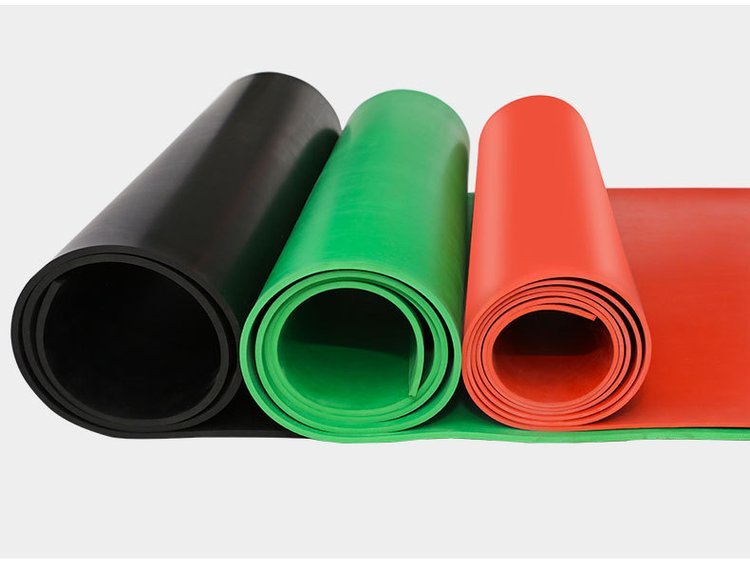
A silicone membrane for a vacuum press is not a commodity film. Hardness, elongation and cure system decide whether the diaphragm stretches over a one-metre mould without creasing, and whether it survives 200 °C cycles for a year or fails in a month. Those properties live in the compound and in the calendering, not in the price list.
The economics are blunt. A sample costs you a courier charge. A wrong production batch costs you scrap, downtime, a missed shipment and a re-order, and on a press running decorative panels or laminated glass a single failed membrane can stop the line with a full load of work in process. Sampling is the last moment when walking away is still almost free, and it is also how you avoid discovering a mismatch after the vacuum press line has been rebuilt around the wrong diaphragm.
What a sample can and cannot prove
Be precise about the limits, because over-reading a sample is as expensive as skipping it.
| Question | Can a sample answer it? | What to do |
|---|---|---|
| Are hardness and thickness what the datasheet claims? | Yes, definitively | Measure both yourself, at several points |
| Will it stretch over my mould without creasing? | Yes, if the piece is large enough to clamp | Ask for a sample sized to your frame, not a swatch |
| Will it last twelve months in my cycle? | Only partly | Run a heat-soak test at your peak temperature |
| Is every future batch identical? | No | This is a process and traceability question, not a material one |
| Is the compound food-contact compliant? | Only with paperwork | Request the FDA or LFGB declaration with the sample |
Specify these seven points before the sample ships
A request that says "please send silicone sheet" will produce a generic offcut. A request with numbers produces a piece you can actually judge. Send the supplier these seven items:
- Application and contact media. What the silicone touches matters: release agent, resin, laminated glass, food, or a hot metal platen.
- Compound grade. Commercial, food-contact (FDA or LFGB), or a flame-retardant variant. Grade is not visible on a sample.
- Hardness. In Shore A. Vacuum-press membranes typically sit at 60 ± 5; gaskets range from 30 to 80.
- Thickness and tolerance. Press membranes run 1–5 mm, general sheet 0.5–10 mm. Ask for the tolerance in millimetres, never "standard".
- Width and edge finish. Membrane width can reach 3800 mm; state whether you need a cut edge, a moulded edge or a reinforced clamp edge.
- Service temperature and cycle. Give both the continuous figure and the peak, plus cycle length.
- Documentation. Certificate of analysis, RoHS and REACH declarations, ISO 9001 certificate.
Five tests to run when the parcel arrives
No laboratory is required. A micrometer, a Shore A durometer and an oven cover most of it.
- Thickness at five points. Use a micrometer with a proper foot pressure, not a caliper, and map the piece corner to corner. Thickness drift across the width is the most common surprise on wide sheet.
- Hardness. Stack the sample to at least 6 mm and take five readings. A 60 ± 5 specification means 55 to 65 is in tolerance; anything outside that will feel different under the clamp frame.
- Stretch and recovery. Cut a 20 mm strip, stretch it to 200 %, hold for a minute, release, and measure permanent set after ten minutes. A membrane that does not return will sag into the mould cavity and thin out at the corners.
- Heat soak. Four hours at your peak service temperature, then re-measure hardness and thickness and check for discolouration, surface tack or oil bleed. Most press membranes are rated to 230 °C continuous; your sample should survive your peak without turning sticky.
- Seam and port check, for bags. Inflate gently and look along the weld for pinholes, then pull the port sideways. A vacuum bag is only ever as good as its seam.
For foam and gaskets, add a compression-set check: compress 25 % for 22 hours at 100 °C, release, and measure how far the sample fails to recover. Open-cell foam recovers differently from closed-cell, and the number predicts sealing force at the end of a shift. The same routine applies to cut parts: with die-cut silicone gaskets, inspect the cut edge and check the ±0.1 mm tolerance as well as the base sheet.
The question that really matters: was the sample from a production batch?
A good sample proves your supplier can make good silicone once. You are buying thousands of square metres of it. So ask two direct questions: was this piece cut from a running production batch or from a bench batch, and what is its batch number?
A supplier who answers both, and who keeps a sealed retained sample of that batch, can be held to it. Name the retained sample as the reference in your purchase order and state that delivered material must match it in hardness, thickness and appearance. That single clause prevents most of the arguments that follow a bad shipment, and it costs nothing to write.
Freight, MOQ and timing: how sampling actually works
Stock silicone samples are normally supplied free of charge, with freight collected on the buyer's courier account; that is the arrangement we use, and it keeps the sample genuinely free of charge while keeping the courier accountable. Custom compounds and moulded prototypes are a different case, since tooling and compounding time are real costs, but a quote for those should still arrive before any commitment.
Keep the minimum order quantity in view when you size your request. A press membrane starts at 5 m² with a 7–15 day lead time, which means the sample is a slice of your eventual order, not a separate product. A piece cut to your frame size lets you run a real cycle; a hand-sized swatch only lets you guess.
Frequently asked questions
Are silicone samples genuinely free?
The material is free and the courier is billed to your account. For stock grades there is no sample fee, no cutting charge and no obligation to order. Custom compounds, moulded parts and tooling are quoted separately.
How long does a sample take to arrive?
Stock grades usually dispatch within a few working days; made-to-order compounds follow the production schedule. Allow one to two weeks door to door for most export destinations.
How large a sample should I request?
Large enough for a representative test. For membranes, ask for a piece you can clamp in your own frame; failing that, 300 × 300 mm is a workable minimum for stretch and heat tests. For gaskets, request both the sheet and one die-cut part, because the cut edge tells you as much as the material.
Can a sample be certified for my market?
ISO 9001, RoHS and REACH documentation travels with the sample for our stock ranges, and FDA or LFGB declarations accompany food-contact grades. Third-party laboratory testing can be arranged at the buyer's cost when your market requires it.
Request a free sample before you commit to a container
If you are specifying a membrane for a vacuum press, a bag for a laminator, or a gasket for a sealed enclosure, ask for the material first. Tell us the application, hardness, thickness and peak temperature, and we will cut a sample to suit it rather than send a generic offcut.
Contact Jonathan at SHINEKIM Silicone: WhatsApp +86 131 4075 9279, or email shinekimrubber@163.com. Samples are free, freight collect, and our engineering team will comment on your specification before you place an order. For an example of how that specification work plays out in production, see the 800 mm woodworking membrane case.
把图纸或样品寄给我们,48 小时内回复选型与报价。
获取报价