01 The problem
The line ran a 4-module-per-cycle recipe at 150 °C, roughly 900 cycles a year. Their previous bags were fabric-reinforced rubber with a stitched and glued seam. After 250–300 cycles the surface turned tacky from EVA outgassing, the seam began to lift, and vacuum would drift mid-cycle.
A drifting vacuum does not always scrap the module outright — it leaves micro-cracks and bubbles that only show up at EL inspection. The plant was scrapping 1.1% of output and could not tie it to a single cause.
02 What we changed
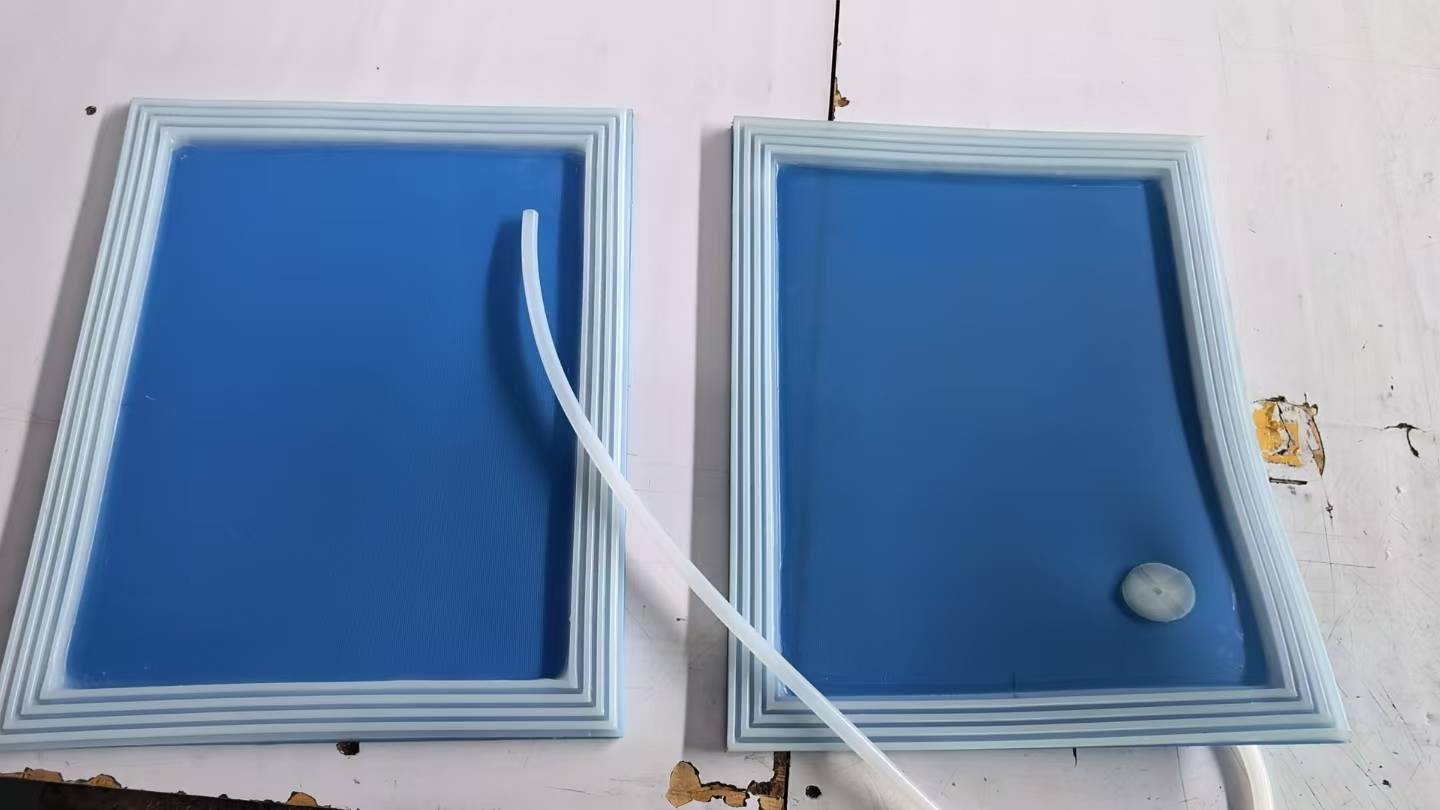
We replaced the bag with a 2.5 mm platinum-cured silicone bag, vulcanised as one piece with no seam in the vacuum path. The port was relocated 40 mm to clear the frame groove, and the bag depth was increased by 6 mm so the bag drapes over busbars instead of bridging them.
Before shipping we ran 50 cycles on our own laminator with the same recipe and measured vacuum decay per cycle: under 2 mbar over 15 minutes, against 8–12 mbar for their old bags.
| Material | Platinum-cured silicone, 2.5 mm |
|---|---|
| Construction | Seamless, one-piece |
| Hardness | 55 Shore A |
| Bag size | 2,400 × 1,300 mm, to bed |
03 The outcome
The first bag ran 14 months — about 1,050 cycles — before it was retired for a scheduled change, not a failure. Surface tack stayed low enough that no release agent was needed between cycles.
EL-detected micro-crack rejects fell by 0.4 percentage points, which on their volume paid for the bag several times over inside one quarter.
Send us the failure mode, operating temperature and cycle count — recommendation and samples within 48 hours.
Request a Quote