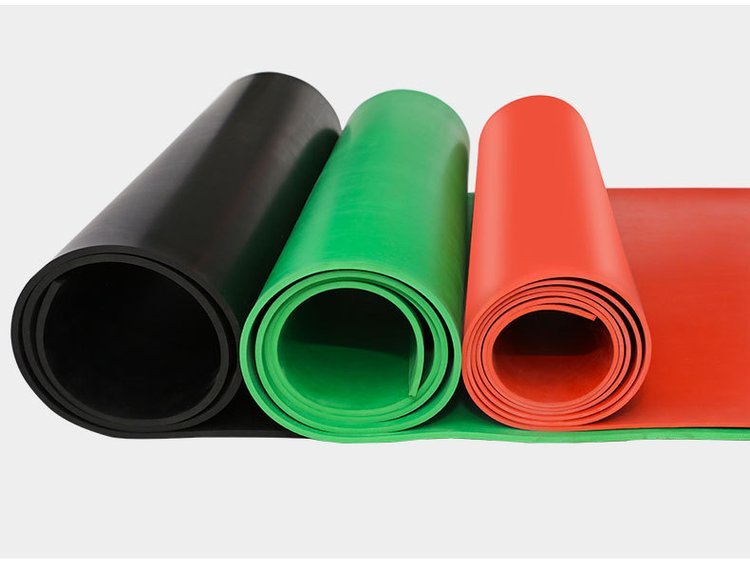
Silicone Sheet for Glass Lamination Furnaces: Matching the Membrane to Your Cycle
A glass lamination furnace does not test a silicone sheet on temperature alone. It tests it on ramp rate, pressure differential, edge contact and hundreds of load-unload cycles. This guide explains how the furnace cycle ages a membrane, which datasheet numbers actually predict service life, and how to specify thickness, clarity and edge construction for architectural and automotive laminated glass
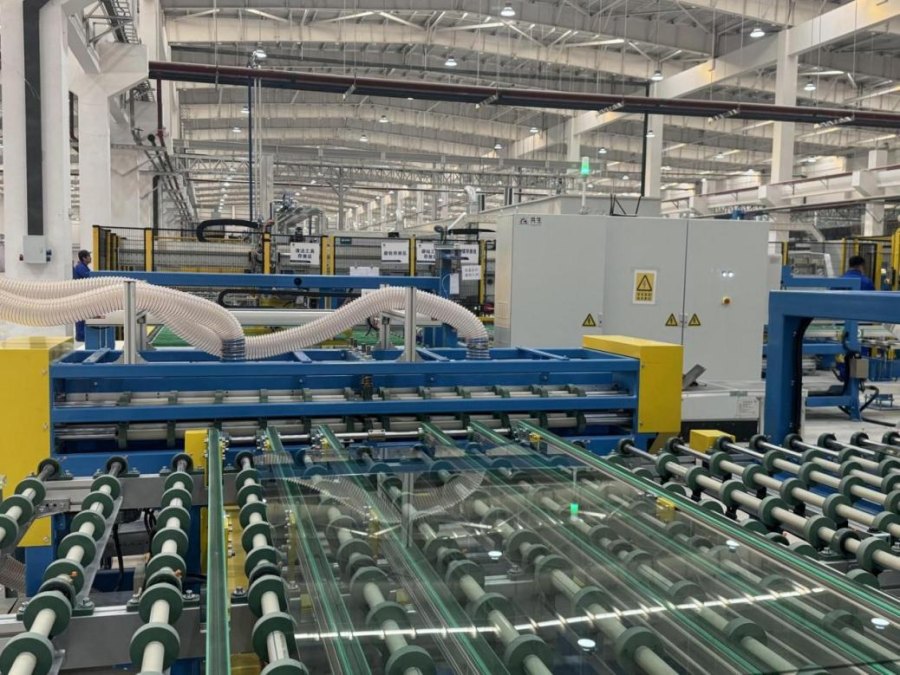
Every glass lamination furnace has one component that touches the product across its full surface, runs at working temperature, and is expected to release it without leaving a mark: the silicone membrane. It is also the component most often specified by habit — a thickness copied from the last machine, a hardness chosen because it was in stock. That works until a batch of oversize panels starts showing edge haze or short interlayer flow, and nobody can tell whether the membrane, the recipe or the glass is at fault.
This guide looks at the furnace as a duty cycle rather than a temperature setpoint, and translates that cycle into the specifications that matter when you buy a silicone sheet for glass lamination furnace service. It covers flat diaphragms and full vacuum bags, because the same silicone behaves differently depending on how it is restrained.
The Furnace Cycle Is the Real Specification
A laminated glass cycle is usually described by its peak temperature, but the membrane experiences four distinct stages, and each one loads it differently.
Load and evacuate. The sheet is drawn down onto cold glass. Air is removed from the interlayer interface, so the membrane is pulled into every gap, edge and spacer. This is where a membrane first conforms to the panel outline, and where creases that form now will be pressed into the laminate later.
Heat ramp. The assembly rises toward interlayer flow temperature. Silicone expands more than glass, so an unrestrained sheet grows a few millimetres per metre; a clamped sheet does not. The difference has to go somewhere — usually into slack that later folds, or into tension at the frame.
Dwell. Pressure and temperature hold while the interlayer wets out. This is the longest continuous thermal exposure of the cycle and the stage that drives compression set and gradual hardening of the compound.
Controlled cooling. The laminate must cool slowly enough to avoid stress, which means the membrane stays in contact while the glass contracts. Release quality — no sticking, no surface replication — is decided here.
A membrane that is comfortable at peak temperature but stiff at 60 °C will still cause trouble, because most handling damage happens on the cold end of the cycle, not the hot end.
Five Duty Conditions That Age a Membrane
1. Thermal cycling rather than steady heat
Continuous service temperature tells you what the compound tolerates; it does not tell you how many ramp cycles it survives. Repeated expansion and contraction works the sheet the way bending works a metal sheet — the failure appears at the restraint points first, usually as a thinning or a fine crack line near the frame, long before the body of the sheet shows anything.
2. Pressure differential across the sheet
Atmosphere on one side, a few millibar on the other. The sheet is a diaphragm under load, and the load is highest over unsupported span — the middle of a large panel, or the gap between a glass edge and the furnace bed. This is why thickness and elongation matter more for oversize work than for small formats.
3. Contact with glass edges
Cut glass edges are the most abrasive thing in the furnace. A sheet that is dragged across an edge during loading picks up a nick; a nick becomes a tear once it is cycled under vacuum. Edge protection and loading discipline add more life than a premium compound does.
4. Interlayer volatiles and plasticiser
PVB and EVA release small amounts of plasticiser and moisture during the first part of the cycle. Silicone resists swelling far better than most elastomers, but residue still builds on the contact face, and a contaminated face transfers marks. Wiping the working face on a schedule is part of membrane maintenance, not cosmetic housekeeping.
5. Handling and storage creases
Silicone takes a set if it is folded and stored that way. A crease pressed into a laminate is a permanent optical defect. Store sheets flat or on a large-radius roll, never folded, and never with weight concentrated on one line.
Reading a Membrane Datasheet for Furnace Duty
Most silicone datasheets are written for general industrial use. For lamination furnace work, four lines carry most of the predictive value.
| Property | Why it matters in a furnace | Typical range |
|---|---|---|
| Thickness | Sets diaphragm stiffness and resistance to edge nicks; also sets the pressure uniformity over large spans | 2–4 mm for glass bags; 1–5 mm for press membranes |
| Hardness | Too soft conforms well but nicks easily; too hard forms slowly around tall or complex geometry | 60 ± 5 Shore A is the usual centre point |
| Tensile strength and elongation | Elongation predicts how far the sheet can conform without thinning; tensile strength predicts tear resistance at a nick | ≥ 8.0 MPa tensile, elongation up to 800% on high-elongation grades |
| Continuous service temperature | Must sit above your dwell temperature with margin, and be read together with cycle count — not as a single number | 160 °C for high-clarity glass bags; 230–250 °C for press and solar grades |
Two further numbers are worth asking for even though they rarely appear on a standard sheet: compression set after 22 hours at temperature, and tear strength. Compression set predicts how quickly the sheet stops returning to flat; tear strength predicts whether a small edge nick becomes a full-width split.
Transparent or Opaque: The Inspection Argument
The choice between a clear and a pigmented sheet is often treated as a price decision. In practice it is an inspection decision. An opaque bag hides interlayer flow, so operators run a conservative fixed recipe and discover short-flow defects only after cooling, when the panel is already scrap. A transparent sheet lets the operator watch the wet-out front move and extend the hold only when it actually needs extending.
One glass processor we worked with replaced grey bags with 3 mm high-clarity bags built to their furnace bed and cut format-change downtime by roughly two thirds, from about 55 minutes with two operators to 20 minutes with one. The clarity change and the quick-release frame did most of that work; the compound was a secondary factor. You can read the full breakdown in the architectural glass vacuum bag case study.
If your furnace runs one format and the recipe is already validated, opacity costs you little. If you change formats weekly, or you are debugging defects, clarity pays for itself quickly.
Choosing Thickness: 2 mm, 3 mm or 4 mm
2 mm conforms fastest and gives the best optical contact on thin, flat panels. It is also the least forgiving of edge contact and of any burr on the bed.
3 mm is the working default for architectural glass. It bridges minor bed irregularities, survives handling better than 2 mm, and still conforms around spacers and edge trim without bridging.
4 mm suits oversize panels, deep spacers and any cycle where the sheet spans an unsupported gap. The trade-off is slower conformance at the start of the cycle, which matters if your ramp is aggressive.
Where a press uses a flat diaphragm rather than a bag, the range widens to about 1–5 mm, and thickness is chosen together with elongation — a high-elongation 2 mm sheet can outperform a stiff 4 mm sheet on a tall mould, because it deforms instead of bridging.
Flat Membrane or Full Bag?
A flat sheet clamped over a bed is simpler to install and cheaper to replace, but every clamp line is a potential leak and a potential crease. A welded bag encloses the assembly completely, so the seal is at the frame rather than across the glass, and the sheet is supported on both faces during evacuation.
For architectural glass the bag usually wins on defect rate. For a press with a fixed bed and a single product family, a flat membrane is often the more economical choice. The architectural glass application guide sets out the selection logic by duty cycle rather than by product type.
Sizing, Seams and Ports
Glass furnace bags are made to the bed, not to a stock size. Three details decide whether a custom bag behaves like a standard one:
- One-piece edge seal. A welded U-seal formed in a single pass removes the corner joint — the point where most bags begin to leak. A bag assembled from four strips has four corners to fail.
- Ports placed for your hardware. Vacuum ports, thermocouple ports and pipe sockets should be welded into the wall at the position your machine actually uses, with reinforcement around each penetration.
- Allowance for slack. A bag cut exactly to the bed will be under tension at dwell temperature. A small, controlled allowance lets the sheet expand without folding.
Installation Discipline
Most early membrane failures are installation failures. Four habits cover the majority of them: inspect the bed and frame for burrs before every change; seat the sheet without tension lines, working from the centre outward; keep the working face free of talc, release agent and grit, since all three transfer to glass; and run one sacrificial cycle on a scrap panel after any change, so that a new sheet's first impression is not taken on production glass.
When to Replace: Signals Before Failure
Membranes rarely fail without warning. The useful signals, in order of appearance, are: a persistent gloss change or haze band on the contact face; a visible thinning line near the frame; slower evacuation times on the same recipe; and interlayer flow that needs a longer hold than it did a month ago. Any one of these is a reason to inspect; two together justify replacement before the next oversize run.
For reference, a well-run high-clarity bag in architectural service is typically rated for 400-plus cycles at up to 160 °C. Treat that as an inspection interval, not a guaranteed life — format changes and edge handling move the number far more than temperature does.
A Short Specification Checklist
- Peak dwell temperature and time, plus the fastest ramp your recipe uses
- Largest and smallest panel format, and the unsupported span in each
- Bag or flat diaphragm, and the frame interface type
- Required clarity, and whether inspection through the sheet is part of your quality plan
- Port positions, sizes and any reinforcement requirements
- Expected cycles between changes, and how you currently detect end of life
- Interlayer type — PVB, EVA, TPU or ionoplast — since each releases differently
Send those seven answers with an outline of the furnace bed and a supplier can quote a size and construction rather than a catalogue number. If you are still working out the sheet grade itself, the silicone rubber sheet range covers the flat-goods side, and the high-clarity glass lamination bag page gives the current bag specification for comparison.
FAQ
Can the same silicone membrane be used in an autoclave and a vacuum furnace?
Often yes, provided the sheet is rated above the autoclave peak and the bag construction can take the higher external pressure. Autoclave cycles add pressure on the outside of the bag, which increases load at the seal and at any port penetration, so the frame and port design usually needs review even when the compound is suitable.
What thickness of silicone sheet is typical for architectural glass lamination?
3 mm is the most common working thickness for architectural panels, with 2 mm used on thin flat work and 4 mm on oversize units or where the sheet spans a gap. The range offered for glass bags is generally 2–4 mm.
How many cycles should I expect from a silicone lamination membrane?
A high-clarity bag in architectural service is typically rated for 400-plus cycles at up to 160 °C. Real life depends more on edge handling, format changes and storage than on temperature, so plan replacement on inspection findings rather than on the rating alone.
Will the membrane leave marks on the glass surface?
Not if the contact face is clean and the sheet is crease-free. Marks usually come from residue buildup, a stored-in crease, or a sheet that has hardened and stopped conforming. Wiping the working face on a schedule and storing sheets flat prevents most of it.
Talk to Us About Your Furnace
SHINEKIM Silicone has manufactured silicone membranes, sheets and vacuum bags in Shanghai since 2017, and supplies glass, solar and vacuum-press processors in more than 60 countries from an ISO-certified plant. If you send the furnace bed dimensions, dwell temperature and the defect you are chasing, we will come back with a recommended thickness, clarity grade and edge construction — and a free sample piece so you can run it on your own line before committing to a full bag.
Contact Jonathan on WhatsApp at +86 131 4075 9279 or email shinekimrubber@163.com to request a free sample and a quote. Include your panel formats and cycle count and you will get a specification recommendation rather than a price list.
把图纸或样品寄给我们,48 小时内回复选型与报价。
获取报价