Silicone Foam & Sponge
Open Cell Silicone Foam Sheet (Blue)
Die-cut ready silicone foam sheets
From $20 m²
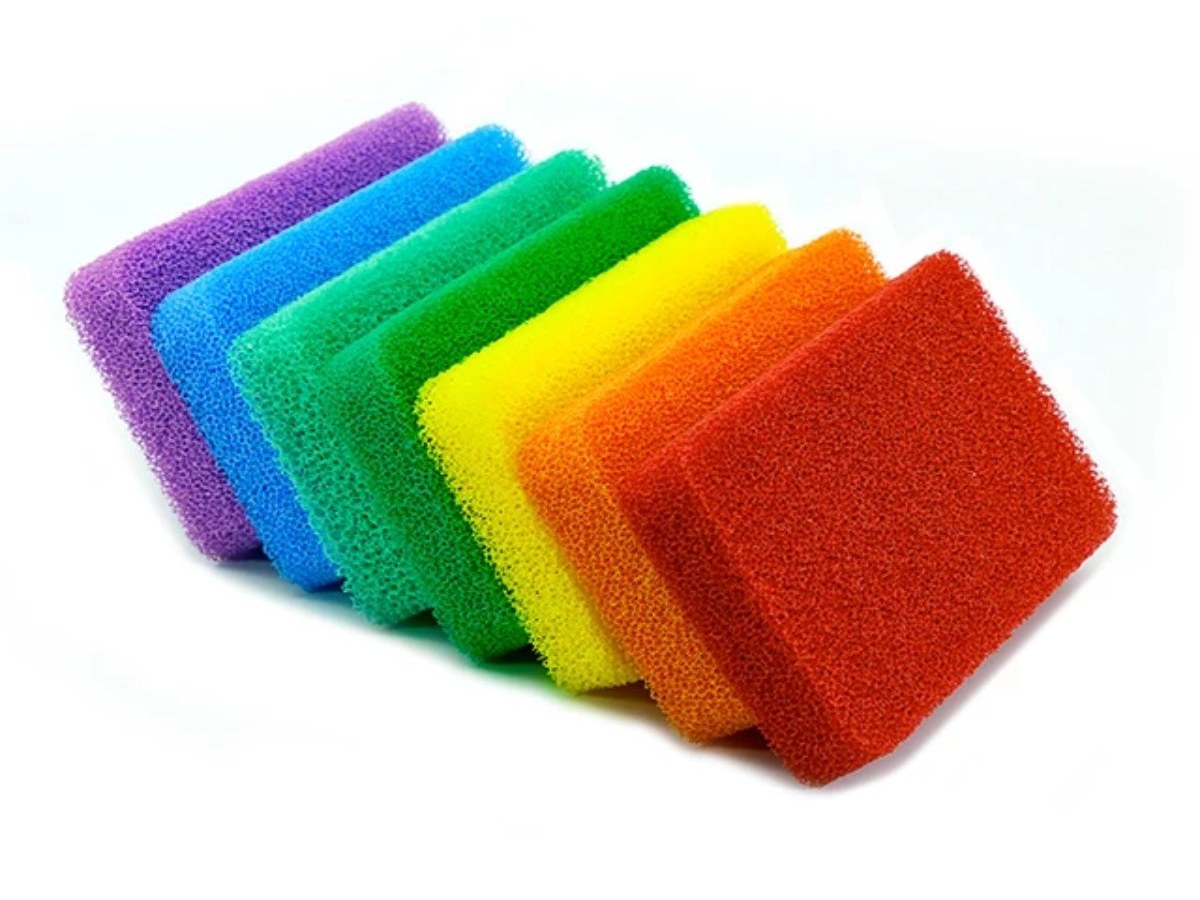
Reusable open cell foam pad for cleaning, cushioning and thermal work
Open cell silicone foam pad with an interconnected pore structure. It cleans and wipes without scratching coated, painted or polished surfaces, rinses back to its original state instead of turning into a smelly sponge, and survives boiling — so one pad replaces months of disposable ones. The same pad still works as a cushioning layer or a thermal barrier up to 200 °C.
A silicone foam pad used for cleaning either scratches the surface, keeps the dirt it picked up, or starts to smell. This one avoids all three. The foam is softer than the coatings, glass and lacquers it is used on, so it wipes without leaving swirl marks. The pores release what they hold under a tap instead of trapping it, so pigment and detergent residue wash out rather than drying inside the cell walls. And because the material takes 200 °C, the pad can be boiled or run through a 90 °C wash cycle to sanitise — which is what turns it from a disposable into a tool.
The open cell structure is what makes it work as a sponge: water goes into the interconnected pores and comes back out when you squeeze, instead of being pushed around the surface. Density and pore size decide the feel — a 0.25 g/cm³ pad at 10 mm is soft and very absorbent, better for delicate surfaces and wiping; a 0.45 g/cm³ pad is firmer and holds its shape when scrubbing. Colour is not decoration either: in food and pharma plants a different colour per production zone is the simplest way to prove a cleaning tool never travelled from the raw side to the filling line.
Beyond wiping, the same sheet is used as a cushioning layer under clamps and fixtures, as a thermal barrier where a hot part meets a cold one, and as a soft gasket on uneven flanges. Supplied from 2 to 25 mm thick, die-cut to any pad size up to 1000×2000 mm, plain or with a pressure-sensitive adhesive backing for pads that have to stay put. Tell us the surface being cleaned and the chemicals involved and we will match density, pore size and thickness to it.
| Structure | Open Cell (interconnected pores) |
| Density | 0.25–0.45 g/cm³ |
| Thickness | 2–25 mm |
| Pad Size | Up to 1000×2000 mm sheet, cut to size |
| Temperature | -50 °C to +200 °C |
| Hardness | 10–25 Shore 00 |
| Water Handling | Absorbs, releases on squeeze |
| Cleanability | Rinse or wash at 90 °C; boil or steam to sanitise |
| Colour | Blue / Green / Yellow / Orange / Red / Purple / Custom |
| Edge | Die-cut / rounded corners |
| Backing | Plain / PSA on request |
| Min. Order | 50 m |
| Lead Time | 7–15 days |
| Packaging | Flat in PE film + carton |
| Certification | ISO 9001 · RoHS |
| Sample | Free sample available (freight collect) |
| HS Code | 4016.93 |
Need other hardness, thickness or dimensions? Our engineering team custom-compounds to spec.
Request a QuoteSHINEKIM silicone is used by manufacturers worldwide across these industries:
Die-cut ready silicone foam sheets
Breathable, high-temp resilient foam
Seal-tight compressible sponge for gasketing