Silicone Foam & Sponge
Open Cell Silicone Foam Sheet (Blue)
Die-cut ready silicone foam sheets
From $20 m²
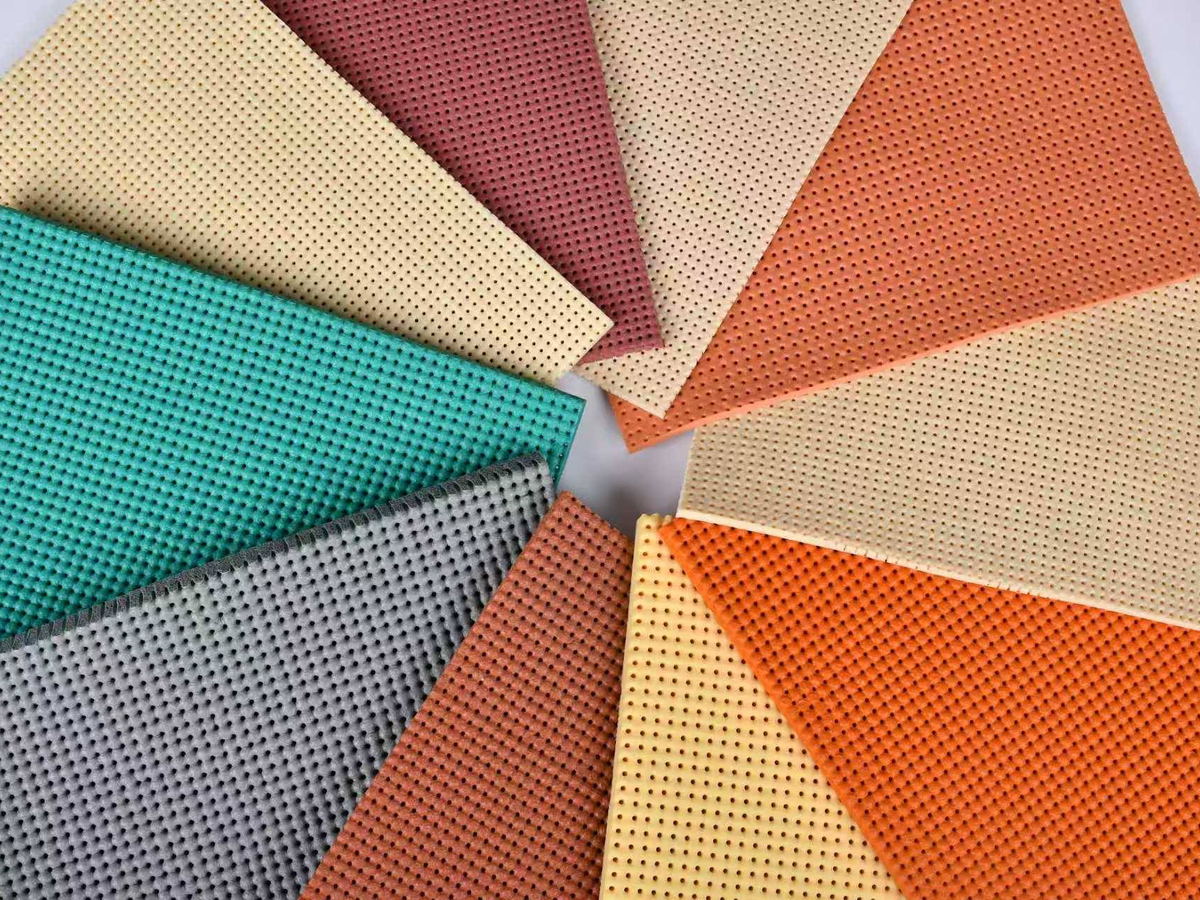
Moulded 900 × 1800 mm pads for dry cleaning and laundry presses
Open cell silicone foam sheet with the hole array moulded in — not punched afterwards — supplied as a fixed 900 × 1800 mm pad in 4, 6, 8 and 10 mm. The holes let steam pass straight through the pad and let the vacuum pull it back out of the garment, which is what a dry cleaning press actually needs — a felt pad saturates, packs down and stops breathing within a few months.
A perforated silicone foam pad sits between the platen and the garment on a dry cleaning or laundry press, and it is the part that decides whether the job comes out right. Steam has to cross the pad from the platen and reach the fabric evenly, then the vacuum has to pull that steam, the moisture and the solvent vapour back through the same pad. A needled felt pad does this well for a few months and then stops: it packs down under the head, loses thickness at the centre, and the middle of the press goes blind while the edges still work. The symptom is familiar to every shop — damp patches, a shine on dark wool, a crease that will not press out no matter how long the head stays down.
Perforating the foam fixes the first half of that problem and the open cell structure fixes the second. The holes are moulded into the sheet itself, not punched out afterwards, and in a dry cleaning shop that difference is visible: a punched hole leaves a torn edge and loose foam crumbs that end up on the garment, with a rough bore that holds lint; a moulded hole comes out with the same dense skin as the sheet, so the wall is smooth, nothing sheds, and the diameter stays put through years of steam cycles. They are through-holes as well, so steam passes vertically through them instead of having to diffuse through the material, and the vacuum has an open path back out. Between the holes the open cell foam spreads steam sideways, so pressure does not concentrate in a ring under each hole. Because the material is silicone rather than felt or Nomex, it does not absorb water, detergent or perchloroethylene — the pad stays light, dries fast, and does not carry last week's solvent smell into a customer's garment.
Supplied as a fixed 900 × 1800 mm sheet in 4, 6, 8 and 10 mm. The format is set by the mould rather than cut from a roll — that is what gives the clean hole walls — and it is sized to cover the platen of most commercial dry cleaning and laundry presses without a joint down the middle, which is where felt pads always fail first. Cut it to the actual platen outline with a knife, leaving 10–20 mm margin so the edge does not curl. Thickness is a matter of how much the head loads the pad: 4 mm for flat platens and light fabrics, 6 mm as the general-purpose choice, 8–10 mm where the platen is not flat or the work is heavy wool, denim and padding. Moulded holes stay clear far longer than punched ones, but check them at every pad change — scale and lint close them long before the foam itself is finished.
| Structure | Open Cell Silicone Sponge, Moulded Perforation |
| Sheet Size | 900 × 1800 mm (fixed) |
| Thickness | 4 / 6 / 8 / 10 mm |
| Holes | Ø4 mm staggered, moulded with the sheet, 10 mm pitch |
| Density | 0.25–0.40 g/cm³ |
| Hardness | 25–40 Shore 00 |
| Temperature | -50 °C to +220 °C |
| Water Absorption | < 5 % by volume |
| Colour | Grey / Beige / Orange / Green / Custom |
| Format | Cut sheet, plain (no adhesive) |
| Min. Order | 10 sheets |
| Lead Time | 7–15 days |
| Packaging | Flat, PE film + plywood pallet |
| Certification | ISO 9001 · RoHS |
| Sample | Free A4 sample available (freight collect) |
| HS Code | 4008.11 |
Need other hardness, thickness or dimensions? Our engineering team custom-compounds to spec.
Request a QuoteSHINEKIM silicone is used by manufacturers worldwide across these industries:
Die-cut ready silicone foam sheets
Breathable, high-temp resilient foam
Seal-tight compressible sponge for gasketing