Tap a number to open that product family
Silicone Cord & Tubing

Insulation Silicone Sponge Tube

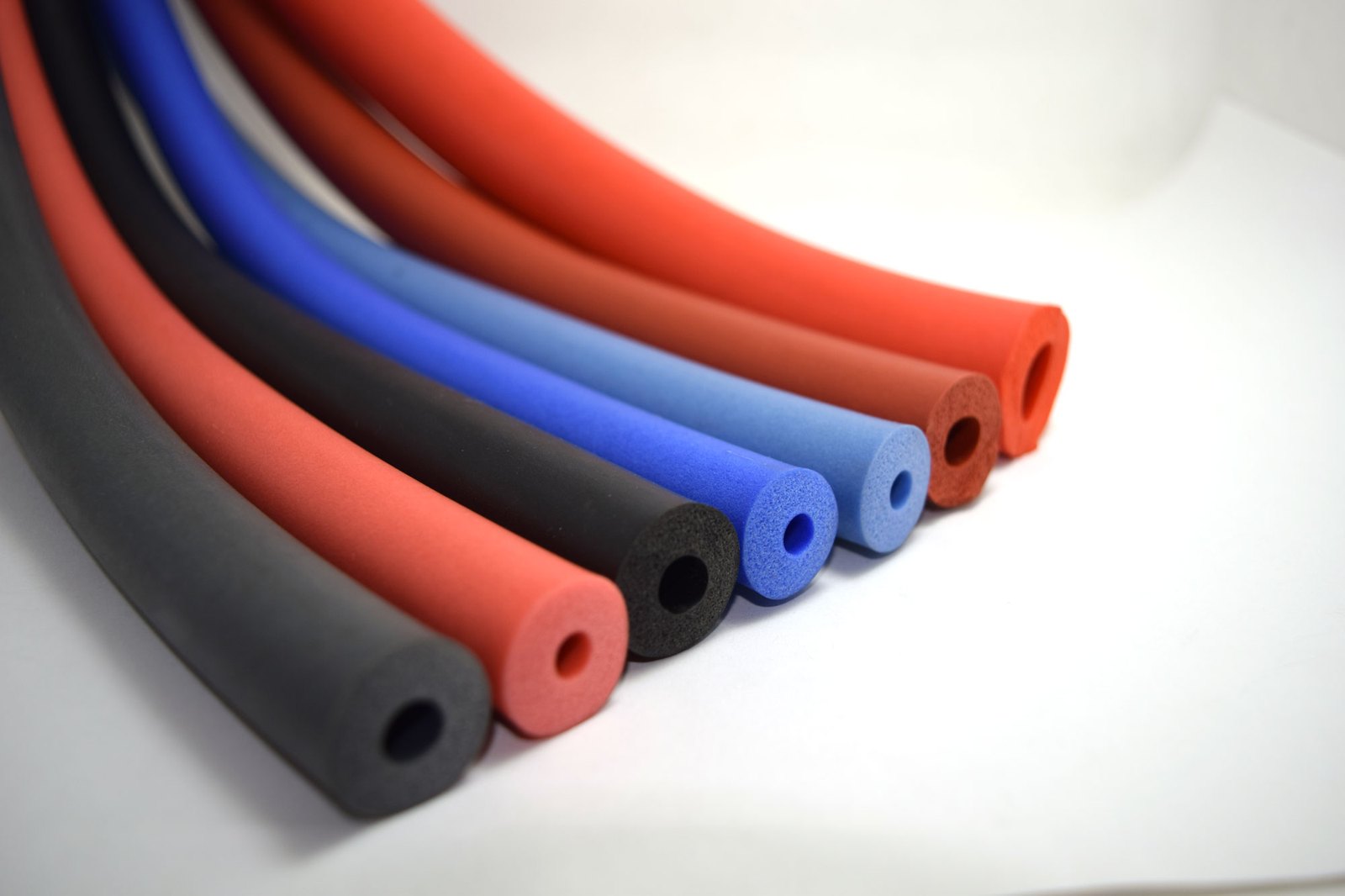
Closed cell silicone sponge tube for thermal and acoustic insulation

From $1.5 m ISO 9001 Certified Free Sample MOQ 100 m

Closed cell silicone sponge tube for insulating pipes, cables and small ducts where the line runs hot, or where the insulation itself has to survive the heat. Flexible enough to push over a bend, soft enough to compress into a clip, and stable from -60 °C to +200 °C without going brittle.

Key Features

  • Closed cells — no water absorption, no wicking along the cable
  • Flexes over tight bends without kinking or flattening the bore
  • Holds from -60 °C to +200 °C: no embrittlement, no dripping
  • Compresses into clips and glands, then recovers its wall
  • Slit and self-sealing versions for retrofitting over an existing line
StructureClosed Cell Sponge
Density0.45–0.65 g/cm³
Bore (ID)4–50 mm
Wall Thickness3–20 mm

Product Overview

The cell structure is the whole argument for sponge tube in insulation. Open cell foam is a sponge: it takes up water, and water in an insulator is worse than no insulator at all. Closed cell sponge has sealed walls, so absorption stays under 1% and moisture cannot travel along the inside of the sleeve to the far end of the run — which is exactly what happens to a sleeved cable that gets wet at one joint.

Silicone rather than EPDM or PVC matters where the line itself gets hot. Standard sponge tube softens and eventually drips at 120–150 °C; silicone sponge holds its shape to 200 °C and stays flexible at -60 °C, so the same part covers an engine compartment, a heater line and an outdoor run in winter. Because the material stays soft across that range, the tube still compresses into a clip or a gland instead of cracking at the bend.

Supplied as coils up to 50 m in bore sizes from 4 to 50 mm and walls from 3 to 20 mm, plain, slit lengthways, or with a self-adhesive lap so it can be wrapped over a line that is already installed. Send the pipe or cable OD and the temperature it sees and we will come back with the wall thickness that gives you the insulation you need without making the assembly too stiff to route.

Technical Specifications

StructureClosed Cell Sponge
Density0.45–0.65 g/cm³
Bore (ID)4–50 mm
Wall Thickness3–20 mm
Outside DiameterUp to 90 mm
LengthCoils to 50 m / straight 1.5 m
Temperature-60 °C to +200 °C (peak 220 °C)
Hardness20–35 Shore 00
ColourBlack / Red / Blue / Grey / Custom
FormatPlain / slit / self-adhesive

Ordering & Compliance

Min. Order100 m
Lead Time7–15 days
PackagingCoil in PE bag + carton
CertificationISO 9001 · RoHS
SampleFree sample available (freight collect)
HS Code4009.11

Need other hardness, thickness or dimensions? Our engineering team custom-compounds to spec.

Request a Quote
ISO 9001 · RoHS

Typical Applications

SHINEKIM silicone is used by manufacturers worldwide across these industries:

I
InsulationSheet and foam for thermal & electrical insulation.
H
HVACSeals and gaskets for heating & ventilation.
V
Vibration DampingCompressible sponge for isolation mounts.
S
SealingGaskets, cord and sponge for reliable, heat-resistant seals.

Frequently Asked Questions

Open cell or closed cell for pipe insulation?
Closed cell, without exception. Open cell foam absorbs water and wicks it along the run, so the insulation turns into a wet sleeve. Closed cell sponge keeps absorption under 1% and is the only grade we quote for insulation work; open cell belongs on pressing tables and acoustic linings where breathability is the point.
What temperature can it take?
200 °C continuous with a 220 °C short peak, and flexible down to -60 °C. Above 220 °C the cell walls start to harden and the tube loses its compression recovery — if your line runs hotter, tell us the temperature and we will quote a different compound rather than let you find out in service.
Can it be fitted over a line that is already installed?
Yes. Order it slit lengthways, or with a self-adhesive lap: open the tube, wrap it round the pipe and press the lap closed. The adhesive grade is chosen for the surface temperature — say whether the line is hot at the time of fitting, because that changes the tape.
How do I choose the wall thickness?
Start from the outside diameter you have to clear and the temperature difference you are holding. 3–6 mm wall is normal for cable bundling and low-temperature lines; 10–20 mm for hot fluid lines and anywhere the tube is also taking mechanical contact. Thicker wall insulates better but makes tight bends harder, so on a convoluted route we usually split the run into two sizes rather than force one.
MOQ, lead time and samples?
Standard MOQ is 100 m per size in coils, 7–15 days lead time. A 1–2 m cut is available as a free sample, freight collect, so you can check the bore fit and the bend radius on the actual line before committing to a coil.
01Own Plant · ISO 9001Full control from compounding to vulcanisation, fully traceable.
02Made to DrawingHardness, colour, size and process all customisable.
03Free SamplesSamples and full technical datasheets on request.
0460+ CountriesReliable worldwide supply and after-sales support.

Related products