01 The problem
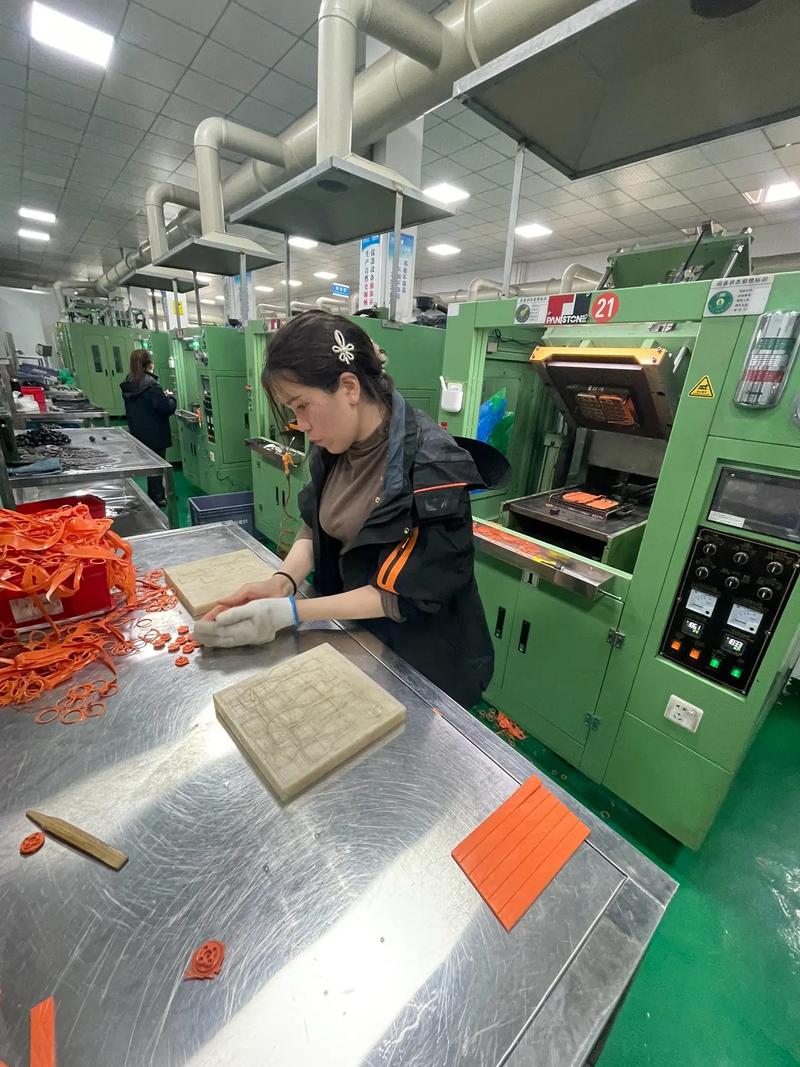
The seal sits behind a membrane keypad and has a 0.4 mm sealing lip. In compression moulding the flash at the lip varied enough that some units leaked at IP67 testing, and the reject rate was around 6%.
The part is only 0.3 g, so small material variations translate into large relative tolerance errors. The customer also needed lot traceability for every shipment.
02 What we changed
We moved the part to LSR injection moulding with a cold-runner system, which removes flash at the sealing lip entirely. A 40 Shore A compound gives enough compliance to seal against the moulded housing without over-compressing the lip.
The tool was built with a 4-cavity layout and in-line vision inspection on the lip dimension, so out-of-tolerance parts are rejected before packing rather than at the customer.
| Process | LSR injection moulding |
|---|---|
| Hardness | 40 Shore A |
| Tolerance | ±0.05 mm on sealing lip |
| Test | IP67, 10,000 actuations |
03 The outcome
Repeatability held at ±0.05 mm across production lots, and IP67 first-pass yield rose from roughly 94% to above 99%.
Seals survived 10,000 button actuations in the customer's life test with no measurable compression set on the lip.
Send us the failure mode, operating temperature and cycle count — recommendation and samples within 48 hours.
Request a Quote